Login
Join Free
Categories
All Categories
All
My Orders
Wish
Cart
0m³/0m³

English
English
 Русский язык
 中文
中文
2026 World Cup Approaching: Why Soccer Card Collectibles Are Becoming a High-Potential Toy Category
2026-04-22 08:58:25
As the 2026 World Cup approaches, global consumer behavior is already beginning to shift. Major international sporting events are not only about viewership and sponsorship—they trigger large-scale demand across multiple retail categories, especially toys and collectibles. Among them, soccer card collectibles are quietly re-emerging as a high-potential segment, driven by nostalgia, social interaction, and increasing investment appeal.
For businesses involved in toy sourcing, distribution, or online retail, this is not simply a short-term trend. It reflects a deeper change in how consumers perceive toys—not only as entertainment products, but also as collectible assets and social currency.
From Niche Hobby to Mass-Market Opportunity
Soccer cards have existed for decades, but their positioning in the toy market has evolved significantly. Traditionally seen as a niche collectible for enthusiasts, they are now entering a broader consumer base due to three main factors:
First, the rise of social sharing culture has amplified their visibility. Collectors increasingly showcase rare cards on platforms like TikTok, Instagram, and YouTube, turning individual purchases into shareable experiences. This naturally drives demand beyond traditional hobby groups.
Second, younger consumers are engaging with collectibles earlier. Compared to previous generations, children and teenagers are now introduced to trading cards as part of both play and collection, blurring the line between toys and collectibles.
Third, scarcity-driven value perception is stronger than ever. Limited editions, player-specific cards, and event-based releases create a sense of urgency and exclusivity, which directly influences purchasing decisions.
Data Signals from the 2022 World Cup
Looking back at the 2022 World Cup cycle provides a useful reference point. During that period, soccer card-related products accounted for approximately 12% of Brazil's toy market sales—a significant share for what was previously considered a niche category.
This level of penetration indicates that collectible toys can temporarily outperform traditional toy categories when aligned with global events. More importantly, it shows that consumers are willing to allocate a higher budget to products that combine emotional engagement with perceived long-term value.
For buyers, this is a clear signal: event-driven collectible products should not be treated as optional add-ons, but as core components of seasonal inventory planning.
2026 World Cup: Structural Demand Expansion
The 2026 World Cup introduces a key structural change—the expansion from 32 to 48 teams. This is not just a sporting adjustment; it directly increases the commercial potential of related products.
More teams mean:
- More players featured in card collections
- More regional markets involved
- More localized demand spikes
- Higher overall product variety
For soccer cards specifically, this expansion translates into larger sets, more collectible variations, and increased repeat purchase behavior. Consumers are more likely to continue buying packs in order to complete collections, which improves sales continuity rather than one-time purchases.
Global Toy Market Context
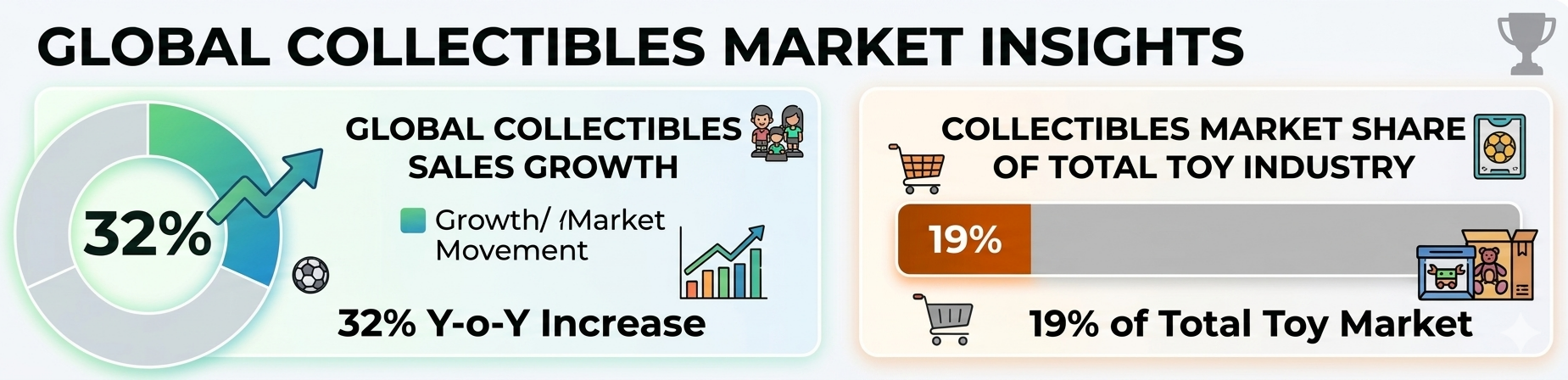
From a broader market perspective, collectible toys are no longer a niche segment. Recent data shows that the category recorded approximately 32% year-on-year growth in 2025, accounting for nearly 19% of the total toy market share.
This level of expansion is not typical for mature toy categories. It indicates a structural shift rather than short-term demand fluctuation.
For buyers, this has two direct implications:
- Collectible products are becoming a core revenue driver, not just a supplementary category
- Consumer behavior is shifting toward repeat purchases and long-term engagement, rather than one-time toy consumption
When this trend is combined with global events like the World Cup, the growth effect is often amplified. In other words, soccer card products are not benefiting from the event alone—they are riding on top of an already expanding category.
What This Means for Your Businesses
For businesses selecting product lines ahead of the 2026 World Cup, soccer card collectibles should be evaluated as part of a broader strategy rather than a standalone item.
Key considerations include:
Timing
Demand typically starts building 6–12 months before the event, peaks during the tournament, and gradually declines afterward. Early positioning is critical to capture pre-event momentum.
Product Mix
A balanced assortment is essential:
- Entry-level packs for high-volume sales
- Mid-range sets for casual collectors
- Premium editions for higher-margin opportunities
Market Alignment
Different regions respond differently to teams and players. Understanding local preferences can significantly improve sell-through rates.
Sales Channels
Soccer cards perform particularly well in:
- E-commerce platforms
- Convenience and impulse-buy retail environments
- Specialty toy and hobby stores
How to Position Your Inventory for 2026
Instead of treating soccer cards as a seasonal add-on, a more effective approach is to integrate them into a broader event-driven product strategy.
This can include:
- Combining soccer cards with related toy categories (sports toys, outdoor toys, novelty items)
- Creating themed product bundles
- Aligning product launches with key tournament milestones
By doing so, businesses can extend the lifecycle of demand and reduce reliance on a single product type.
About Zhorya
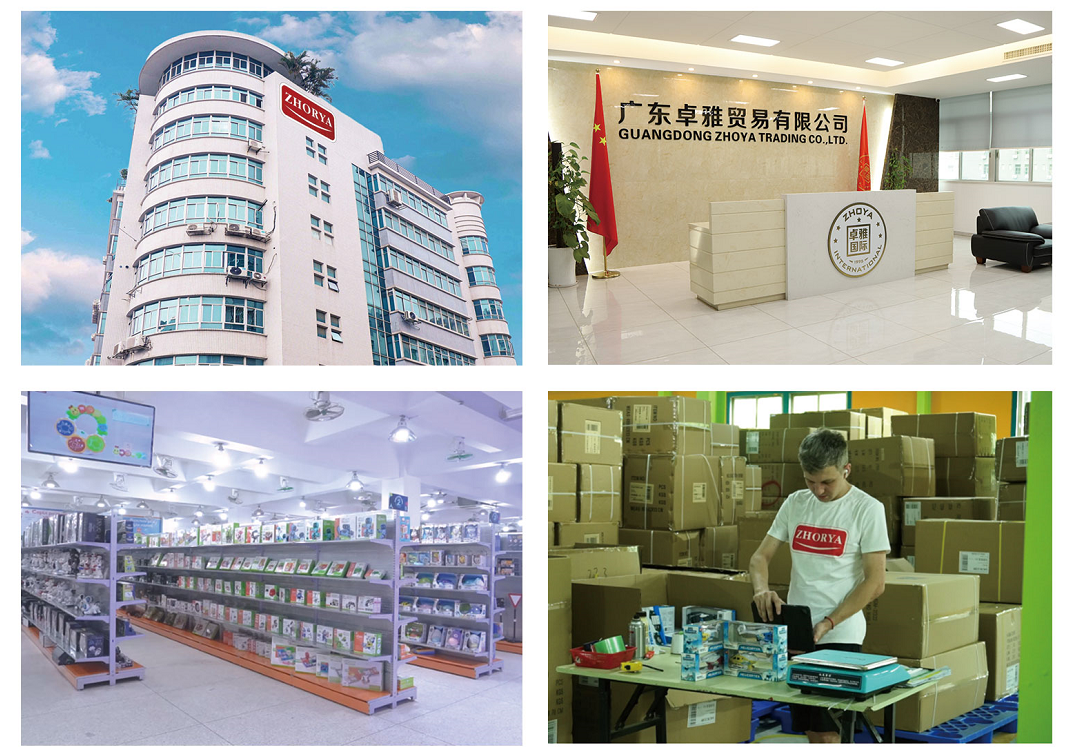
When preparing for demand around major events like the World Cup, product selection and supply reliability are usually the two main concerns. Zhorya, a toy supplier based in China, supports buyers in both areas by offering product options that align with event-driven sales.
To make product planning more straightforward, Zhorya focuses on a few key areas:
- Providing a wider product selection
Zhorya covers multiple related categories, including collectible toys, sports-themed items, and impulse products. This allows buyers to build a more complete assortment instead of sourcing from multiple suppliers. - Supporting practical customization
Zhorya handles common customization needs such as packaging, branding, and product variations, making it easier to adapt products for different markets and sales channels. - Maintaining stable supply for bulk orders
With consistent production capacity, Zhorya helps reduce supply uncertainty, especially during peak seasons when demand can change quickly. - Keeping product lines updated
Zhorya regularly adjusts its product range based on market demand, so buyers can refresh their selection without restarting the sourcing process.
By focusing on these areas, Zhorya helps buyers manage product selection more efficiently during high-demand periods, while keeping their overall assortment flexible and easier to control
Conclusion
The 2026 World Cup highlights a clear shift: soccer card collectibles are moving into the mainstream. For businesses, early positioning and integrating them into a broader product strategy will be key. With stable supply and flexible options, Zhorya, based in China, helps simplify sourcing during high-demand periods. For product inquiries or bulk sourcing support, contact Zhorya to plan your World Cup inventory more effectively.