Login
Join Free
Categories
My Orders
Wish
Cart
0m³/0m³

English
English
 Русский язык
 中文
When Should You Add New Toys to Your Product Range?
2026-09-19 08:57:25
A toy range does not need to grow simply because more products are available.
Adding new toys can create fresh reasons for customers to visit, support seasonal merchandising, fill gaps in an existing assortment, and respond to changing demand. But adding products too frequently can also create unnecessary stock, duplicate existing items, complicate purchasing decisions, and make a product range harder to manage.
The more useful question is therefore not "How often should I add new toys?" but: "What evidence tells me that my toy range needs something new?"
There is no universal schedule that works for every business. A retailer with a compact, carefully selected assortment may introduce only a few new products each season, while a larger toy business may refresh different sections of its range throughout the year.
The right timing depends on demand, product performance, seasonality, customer feedback, available space, purchasing plans, and the role the new product is expected to play.
Here are the practical signals to look for before expanding your toy range.

8 Signs It May Be Time to Add New Products
1. Your Existing Range Has a Clear Product Gap
One of the strongest reasons to add a new product is that customers are looking for something your current assortment does not cover.
A product gap does not necessarily mean you need an entirely new category.
For example, you may already carry:
- plush toys but very few character-style designs
- outdoor toys but limited compact travel options
- educational toys but little for younger children
- sensory toys but no newer tactile formats
- toy vehicles but limited small-scale collectible styles
- pretend-play products but few accessories to support them
In this situation, the objective is not simply to increase the number of SKUs.
The objective is to make the range more complete.
Before adding a product, look at what customers ask for, what sales staff repeatedly hear, what products are frequently searched for, and which related items are missing from your current selection.
A new SKU has a stronger commercial reason to exist when it fills a genuine gap rather than merely resembling something already on the shelf.
2. Customers Keep Asking for Something You Do Not Carry
Customer questions can be an early indicator of product demand.
If different customers repeatedly ask about a particular type of toy, feature, format, price point, or product variation, that information is worth recording.
For example, several customers may ask whether you have:
- a smaller version of an existing toy
- a different color or design
- a particular type of sensory toy
- a toy suitable for travel
- a gift-oriented product
- a product with sound or electronic functions
- a particular theme or play pattern
One request does not automatically justify adding a new product.
Repeated requests are more useful because they suggest that the missing product may represent a broader demand pattern.
The important step is to distinguish specific customer demand from an isolated request.
A simple product-demand record can help. Track the product type requested, how often it appears, the customer segment asking for it, the approximate quantity of interest, and whether similar products already exist in your range.
Over time, these records can provide a more useful basis for product selection than simply choosing whatever looks new.
3. A Product Category Is Performing Well, but the Range Is Too Narrow
Another useful signal appears when one category is already generating strong interest.
Suppose a particular toy category consistently attracts attention, but your range contains only a small number of products within it.
That can be an opportunity to add depth rather than moving into an unrelated category.
For example, if a sensory toy section is performing well, you might examine different textures, formats, sizes, designs, or price points before deciding whether another completely different category is necessary.
This approach can make product expansion more logical.
Instead of asking, "What new toy should we add?" ask, "Where is the existing range showing enough demand to justify greater choice?" That distinction matters because product expansion should ideally strengthen the overall assortment.
4. Your Range Needs a Seasonal Refresh
Seasonality is another natural reason to introduce new products.
Toy demand can change significantly around periods such as:
- back-to-school
- summer holidays
- Christmas
- Halloween
- Easter
- vacation periods
- gifting seasons
- local festivals or events
A seasonal product does not necessarily need to become a permanent part of the range.
Some products can have a specific merchandising role for a limited period and then be replaced by another seasonal selection.
The key is timing.
If a product is intended for Christmas, waiting until the season is already underway may leave too little time for purchasing, shipping, merchandising, and sales. Likewise, adding summer-oriented products after the main holiday period has passed reduces their useful selling window.
Seasonal product planning therefore requires working backward from the expected selling period.
Consider product selection, supplier lead time, sampling, testing, ordering, shipping, receiving, and merchandising before deciding when the product should actually be introduced.
5. Your Current Products Are Starting to Feel Repetitive
A toy range can have plenty of SKUs and still offer too little meaningful variety.
This happens when new products are almost identical to existing products.
For example, adding ten toys with nearly the same function, size, packaging format, and price point may technically expand the range but create very little additional choice.
Before introducing another product, compare it with your existing assortment.
Ask:
- Does it offer a different play experience?
- Does it target a different age group?
- Does it introduce a different price point?
- Does it provide a different format or size?
- Does it suit a different buying occasion?
- Does it complement an existing product?
- Does it give customers a reason to choose something they could not choose before?
If the answer to all of these is no, the new SKU may simply create duplication.
6. Your Price Structure Has an Obvious Gap
Sometimes the missing product is not defined by category at all.
It is defined by price.
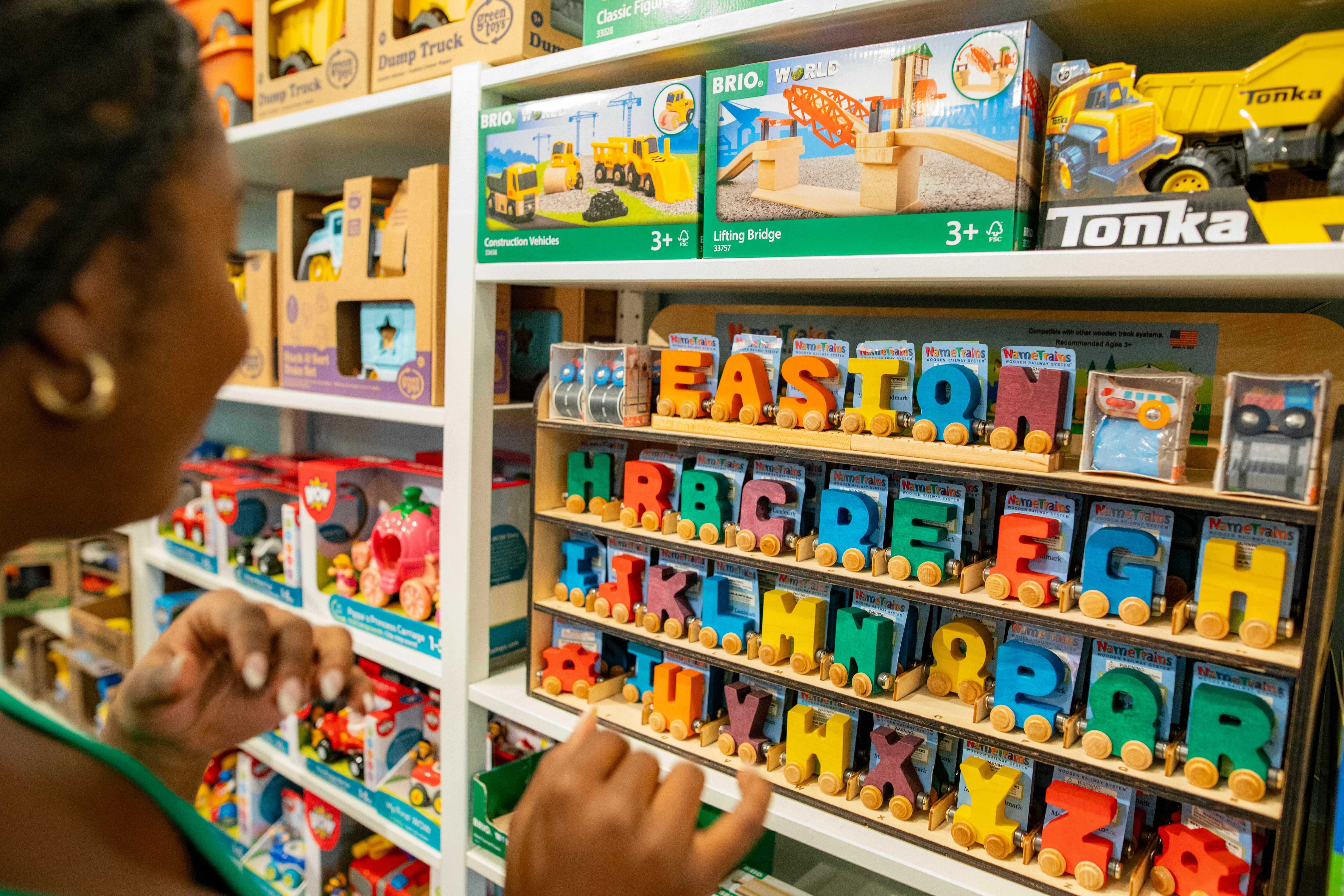
Imagine a range with products concentrated around $5–$8 and then jumping directly to $20+. There may be an opportunity for products positioned between those levels.
The same applies in the opposite direction.
If your range has many low-priced impulse products but very few higher-value items suitable for gifting, introducing products at a different price level could give the assortment greater balance.
Price architecture is particularly important when customers compare several products side by side.
A new product can have a useful role even when it does not introduce a completely new toy category.
7. You Have Evidence From Existing Sales Data
Before adding new products, examine what your existing numbers are telling you.
Useful indicators can include:
- units sold
- sales value
- repeat purchases
- sell-through rate
- product returns
- stock turnover
- customer inquiries
- search activity
- seasonal changes
- performance by price range
- performance by category
The goal is not to find a single "winning" metric.
Instead, look for patterns.
For example, if several products in one category consistently perform well, that may justify testing related products. If a category attracts significant browsing but produces few purchases, adding more SKUs may not solve the underlying problem.
Sometimes the better decision is to improve the existing assortment rather than expand it.
8. Your Existing Range Has a Natural Opportunity for Cross-Selling
New products can also make sense when they complement products that already sell.
For example, an additional toy may work as:
- an accessory
- a companion product
- a lower-priced add-on
- a gift pairing
- a different size option
- an alternative design
- a product for a related age group
This can be more meaningful than adding an unrelated item because the new product has a defined role within the existing range.
A good product range is not simply a long list.
It is a group of products that make sense together.
How Often Should You Add New Toys?
There is no fixed number of new products that every toy business should add each month or each season.
The appropriate frequency depends on the size of the business, purchasing cycle, sales channels, available space, inventory budget, and category strategy.
A useful approach is to separate products into three groups:
Core products are the items that consistently support the range and should remain available.
Seasonal or trend-sensitive products can be introduced when there is a clear commercial opportunity and removed or replaced when demand changes.
Test products are new items introduced to measure customer response before making a larger commitment.
This structure prevents every new product from being treated as equally important.
It also makes range management easier because each SKU has a reason for being there.
New Products Should Improve the Range, Not Just Increase the SKU Count
A larger toy range is not automatically a better toy range.
The most useful additions are products that introduce meaningful choice, respond to identifiable demand, complement existing products, or create a timely opportunity.
That means product expansion should be treated as an ongoing process of observation and testing.
Watch what customers request. Review what sells. Identify gaps. Monitor seasonal changes. Compare new ideas against the products already in the assortment. Then decide whether the new product genuinely adds something.
The result is a toy range that grows with a reason behind each addition.
Looking for New Toy Products to Expand Your Range?
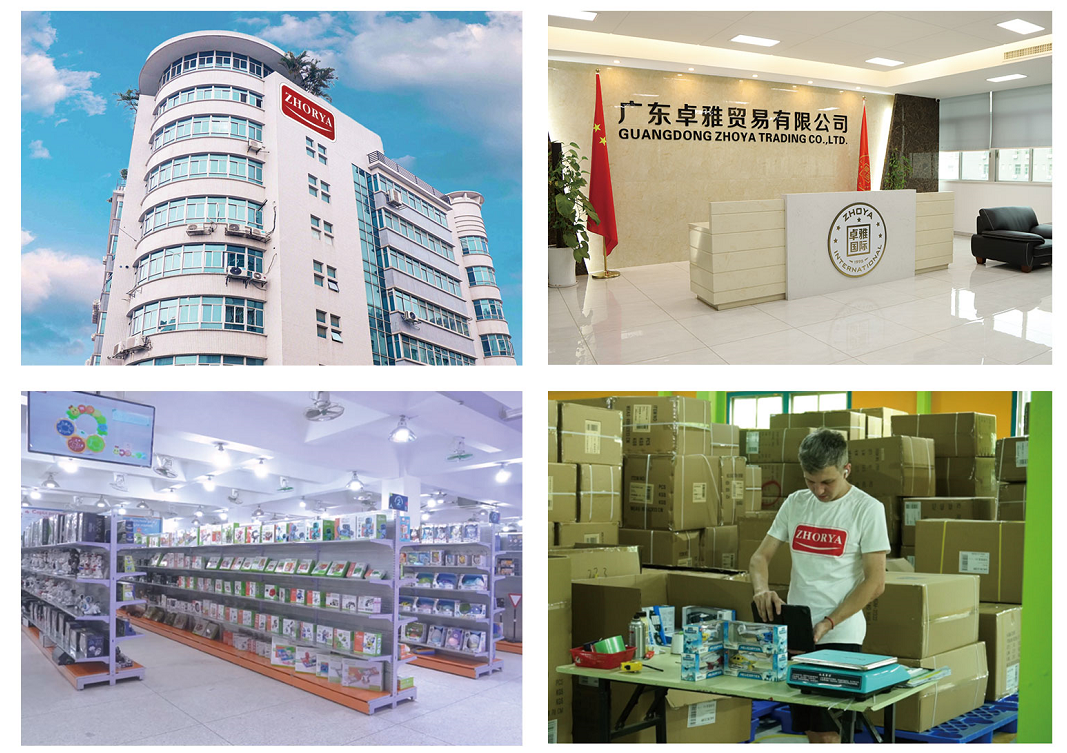
For businesses that need access to a broader selection of toys, ZHORYA Toys provides a practical way to explore different product categories without having to manage every product source separately. Zhorya offers access to 2M+ toy SKUs covering categories from educational and wooden toys to plush, sensory, electronic, outdoor, pretend-play, and other toy styles. Buyers can also discuss OEM/ODM options when a standard product needs customized packaging, branding, molds, or product features. For products that need a faster starting point, Zhorya's Ready to Ship selection focuses on popular styles available for online ordering with one-carton MOQ options. If you are reviewing your current assortment and want to identify products that could fit your next range update, you can contact Zhorya as a wholesale toy supplier and discuss the product types, quantities, and customization requirements you are looking for.
Conclusion
Adding new toys should be based on clear demand and a defined role within the assortment, rather than a fixed schedule. By tracking product gaps, customer requests, seasonal opportunities, sales data, and complementary products, you can make more informed range decisions. When it is time to explore new options, ZHORYA Toys, as a wholesale toy supplier, offers a broad selection of toy products and flexible sourcing options to support different range updates.
Get Your Free Quote
We will reply within 24 hours.