Login
Join Free
Categories
My Orders
Wish
Cart
0m³/0m³

English
English
 Русский язык
 中文
中文
Toys That Work Across Multiple Sales Channels
2026-08-24 08:57:24
Selling toys through more than one channel can create more opportunities to reach customers, but it also makes product selection more important. A toy that performs well in a physical store may need a different presentation online. A product that attracts attention on a marketplace may not be the easiest item to merchandise on a retail shelf.
For businesses selling through retail stores, e-commerce websites, marketplaces, social commerce, pop-up shops, or wholesale distribution, the strongest products are often those that can adapt to several selling environments without requiring a completely different merchandising strategy.
This is where toys that work across multiple sales channels become especially valuable.
Instead of choosing products based only on whether they look attractive in a catalog, it is useful to consider how easily each toy can move from a shelf to an online product page, from a marketplace listing to a social media video, or from a wholesale assortment to a seasonal display.
What Makes a Toy Suitable for Multiple Sales Channels?
Not every toy needs to be sold everywhere. However, products with certain characteristics are naturally easier to introduce across different channels.
A multi-channel-friendly toy usually has a combination of:
-
Clear product appeal that can be understood quickly
-
Packaging that communicates the basic product information
-
A manageable size for storage and shipping
-
A play concept that does not require extensive explanation
-
Strong visual appeal for online content
-
A price point that can fit different retail strategies
-
Product information that can be adapted for different listings
-
Broad enough appeal to work in more than one type of store
The goal is not to find one product that performs identically everywhere. The goal is to select products that can adapt without becoming difficult or expensive to sell.
For example, a small novelty toy may work as an impulse item near a physical checkout counter, while the same product can be sold online as part of a themed collection or bundled assortment. The product stays the same, but the merchandising approach changes.
That flexibility is valuable when you are managing several sales channels at once.
Toy Categories That Adapt Well Across Sales Channels
1. Toys With Strong Visual Appeal
Visual products are particularly useful when your business combines physical retail with e-commerce and social media.
A shopper standing in a store has only a few seconds to notice a product. Online, you face a similar challenge because customers scroll through product grids, marketplace results, videos, and social posts.
Toys with distinctive shapes, bright designs, interesting functions, or satisfying play actions can create an immediate reason to stop and look.
This does not mean every multi-channel toy needs to be colorful or electronic. A simple construction set, puzzle, plush toy, vehicle, or creative toy can also have strong visual appeal if its play experience is easy to demonstrate.
For online channels, ask a practical question:
Can someone understand why this toy is interesting from one product image or a short video?
If the answer is yes, the product already has an advantage.
2. Toys That Are Easy to Demonstrate
Some toys become much more appealing when customers can see how they work.
This makes them suitable for product videos, short-form social content, marketplace images, and in-store demonstrations.
Examples can include:
-
Remote control toys
-
Interactive toys
-
Building toys
-
Creative activity toys
-
Novelty toys
-
Light-up toys
-
Outdoor toys
-
Games and puzzles
A demonstration can show movement, sound, transformation, interaction, or the basic gameplay in just a few seconds.
This is useful beyond social media. A short demonstration can also become part of an e-commerce product page, a sales presentation for wholesale customers, or digital content used by retailers.
One product can therefore generate several types of commercial content.
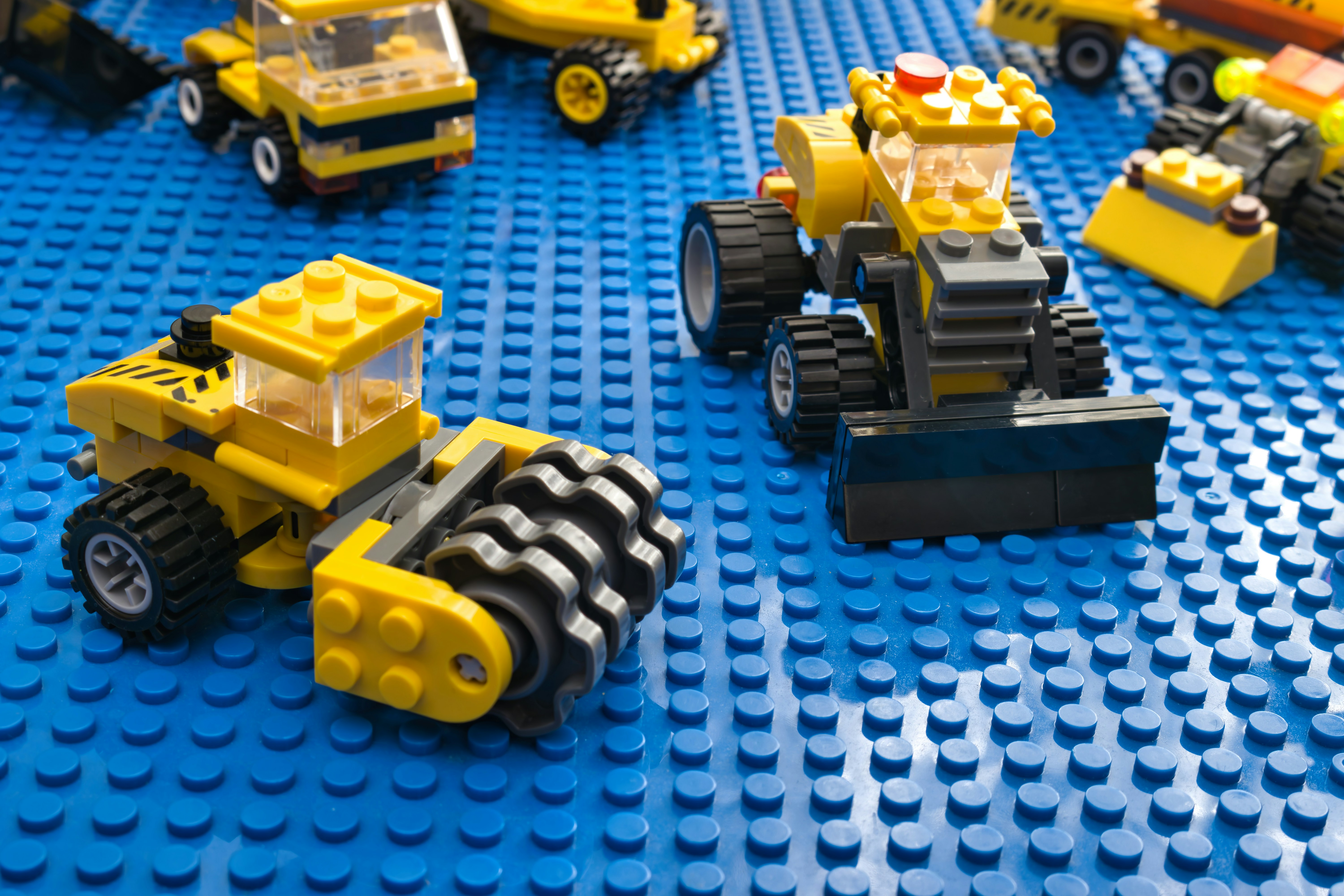
3. Toys With Simple Product Positioning
Products become harder to sell across channels when customers need a long explanation before understanding what they are buying.
A toy with a straightforward concept is easier to position.
Consider the difference between:
“A creative building toy for open-ended construction and imaginative play”
and a product that requires several paragraphs just to explain its basic function.
The first type gives you more flexibility. It can be described on a retail shelf, e-commerce page, marketplace listing, catalog, or social post without changing the fundamental message.
This is especially useful when your products are distributed through different retailers. Each channel may have different space limitations, but the core product message remains consistent.
4. Compact Toys That Are Easier to Handle
Product size can have a major impact on multi-channel selling.
Large toys may work very well in physical retail but create additional challenges for e-commerce fulfillment, warehouse storage, shipping costs, and marketplace logistics.
Compact products are often easier to move between channels because they can fit into more merchandising environments.
Small and medium-sized toys can potentially be:
-
Displayed on shelves
-
Added to checkout areas
-
Included in gift assortments
-
Sold through online stores
-
Listed on marketplaces
-
Included in promotional bundles
-
Featured in seasonal collections
This does not mean larger toys should be excluded. Ride-on toys, outdoor products, playsets, and other larger categories can still work across multiple channels. They simply require more careful consideration of shipping, storage, display space, and product presentation.
The important point is to evaluate channel compatibility before purchasing, rather than discovering operational problems after inventory arrives.
5. Toys That Support Different Merchandising Strategies
A particularly useful product is one that can be sold individually but also fits into a larger assortment.
For example, a toy may be suitable for individual sale in an online store while also fitting into:
-
A themed retail display
-
A birthday gift collection
-
A holiday assortment
-
A back-to-school promotion
-
A travel toy selection
-
A low-price impulse section
-
A category-specific online collection
This gives retailers more ways to use the same inventory.
It also makes assortment planning easier. Instead of building completely separate product selections for every channel, you can identify products with several possible merchandising roles.
That can reduce unnecessary complexity while giving each channel room to present the products differently.
6. Toys With Multiple Price-Point Opportunities
A multi-channel assortment should not depend entirely on one price level.
Different channels can attract customers with different purchasing habits. A physical toy store may need accessible impulse products, while an e-commerce store may have more room for larger purchases or bundles.
For this reason, it is useful to build an assortment that includes products at several price points.
A balanced selection might contain:
-
Lower-priced impulse toys
-
Mid-range everyday toys
-
Higher-value feature products
-
Products suitable for bundles or multi-item purchases
The advantage is not simply having "heap" and "expensive" products. It is creating enough variety for different shopping occasions.
A customer looking for a small gift and a customer shopping for a larger birthday present do not have the same requirements, even if they visit the same website.
7. Toys That Can Be Bundled
Bundling is another reason certain toys work well across multiple sales channels.
A product that can naturally be combined with related items gives you more merchandising possibilities.
For example, related toys can be grouped by:
-
Age range
-
Play type
-
Theme
-
Color
-
Activity
-
Holiday
-
Gift occasion
Online, these combinations can become product bundles or "complete the set" recommendations.
In physical stores, the same concept can become a cross-merchandising display.
For wholesale buyers, it can also make assortment planning easier because several complementary products can be ordered together instead of being treated as completely unrelated items.
8. Toys That Can Generate Useful Product Content
Multi-channel selling increasingly depends on having usable product content.
A product needs more than a name and a price. Depending on the channel, you may need product images, dimensions, features, packaging information, videos, usage instructions, age recommendations, and compliance information.
This makes content-friendly products particularly valuable.
Before adding a toy to your assortment, consider whether you can easily create:
A product listing:
Clear images, specifications, features, and packaging details.
A social post:
A simple visual showing the product in action.
A sales presentation:
A concise explanation of why the product belongs in the assortment.
A retail display:
Packaging or signage that communicates the product quickly.
When one product can support all four, it becomes much easier to manage across channels.

How to Evaluate a Toy Before Adding It to Your Assortment
Instead of asking only whether a toy looks popular, evaluate it from a multi-channel perspective.
A simple checklist can help:
-
Retail: Does it look attractive on a shelf or display?
-
E-commerce: Can customers understand the product from images and descriptions?
-
Marketplace: Can the product information be organized into a clear listing?
-
Social commerce: Can its function or play experience be demonstrated visually?
-
Shipping: Is its size and packaging practical for fulfillment?
-
Merchandising: Can it fit into different themes or collections?
-
Pricing: Can it sit comfortably within the channel's target price range?
-
Content: Can you produce useful product photos and videos?
-
Assortment: Does it complement other products rather than compete with everything around it?
-
Compliance: Can the necessary product and safety information be provided for the markets where you plan to sell?
This type of evaluation is more useful than simply labeling a product as an "online toy" or a "retail toy."
The best multi-channel products are not defined by one channel. They are defined by their ability to change presentation while keeping their core appeal.
Building a Multi-Channel Toy Assortment
A strong assortment does not need to contain hundreds of unrelated products.
Instead, start with several product groups that serve different commercial roles. Combine visually appealing products with practical everyday toys, impulse items with higher-value products, and individual products with items that can be bundled.
Then consider how the same assortment could appear in different environments.
For a physical store, the focus may be shelf impact and easy navigation.
For an online store, the focus may shift toward product photography, search visibility, specifications, and recommendations.
For a marketplace, structured product information and clear differentiation become particularly important.
For social commerce, demonstration and visual storytelling can take priority.
The underlying inventory does not necessarily need to change for every channel. What changes is the way the product is presented and connected to the customer's shopping journey.
Choosing a Toy Supplier for Multiple Sales Channels
The supplier you work with can also affect how easily you build a multi-channel assortment.
A useful supplier should be able to provide more than a long product list. You may need consistent product information, packaging details, product specifications, images, compliance documentation, and flexible assortment options.
Communication also matters.
When your business sells to different markets and through different channels, product requirements can vary. Having a supplier that understands wholesale sourcing and can help you identify suitable products makes assortment planning more practical.
It is also worth looking beyond individual SKUs. A supplier with a broad range can help you develop a connected assortment rather than forcing you to source every category separately.
Why ZHORYA Can Support Multi-Channel Toy Sourcing
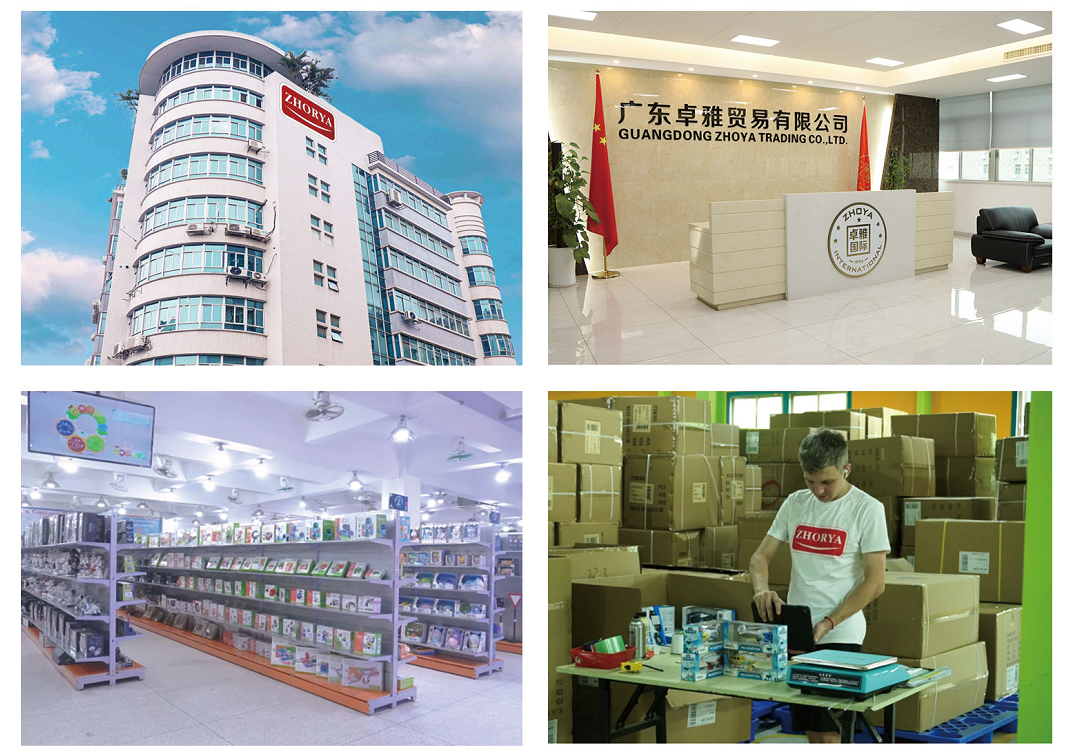
Choosing products for multiple sales channels is easier when you can work with a supplier that offers variety, flexible sourcing options, and support beyond individual products. ZHORYA, a China-based toy supplier, provides toy buyers with:
-
A broad product range — Source toys across different categories, price points, and play experiences to build assortments for different sales environments.
-
Multi-channel flexibility — Select products suitable for physical retail, e-commerce stores, marketplaces, and other sales channels.
-
OEM/ODM support — Develop customized toys or packaging when standard products do not fit your brand or market requirements.
If you are looking for toys that can work across multiple sales channels, contact ZHORYA to explore products suited to your market and sourcing requirements.
Get Your Free Quote
We will reply within 24 hours.