Login
Join Free
Categories
My Orders
Wish
Cart
0m³/0m³

English
English
 Русский язык
 中文
中文
Toys That Sell Well Without Product Demonstrations
2026-08-27 08:55:55
In a busy toy store, not every product has the luxury of a salesperson standing nearby to explain how it works. Customers may browse while waiting in line, walk past a display on their way to another section, or shop in a store where employees simply do not have time to demonstrate every item.
This makes one product characteristic particularly valuable: immediate understandability.
Toys that are easy to understand without a demonstration can communicate their appeal through their appearance, packaging, shape, or familiar play pattern. A customer can look at the product and quickly answer three questions: What is it? What does it do? Why would a child enjoy it?
For retailers, distributors, and other toy businesses, this can make certain products easier to merchandise across different selling environments. The goal is not to find toys that literally require no explanation in every situation. Instead, it is to build an assortment where a meaningful portion of products can attract attention and communicate their basic play value independently.
What Makes a Toy Easy to Sell Without a Demonstration?
Before looking at specific categories, it helps to understand what makes a product "demonstration-light."
The strongest candidates usually have at least one of these characteristics:
-
The function is immediately visible.
-
The toy has a familiar form or play pattern.
-
The packaging clearly communicates the activity.
-
The product creates an obvious visual or tactile reaction.
-
The toy can be understood from a single product image.
-
The child can imagine how to use it without detailed instructions.
-
The product has a simple first-use experience.
This does not mean the toy has to be simple or low-value. A sophisticated toy can still be easy to understand if its core benefit is communicated clearly.
For example, a puzzle may have hundreds of possible designs and varying levels of difficulty, but the basic concept is familiar. A plush toy does not need a salesperson to explain why a child might want to hold it. A novelty toy with an unusual shape can create curiosity before anyone explains its function.
For B2B buyers, this distinction matters because products may be sold through different environments. A toy that depends heavily on live explanation can be harder to merchandise consistently across independent retailers, gift shops, checkout areas, online stores, and mixed product displays.
Types of Toys That Sell Well Without Product Demonstrations
1. Plush Toys With Strong Visual Character
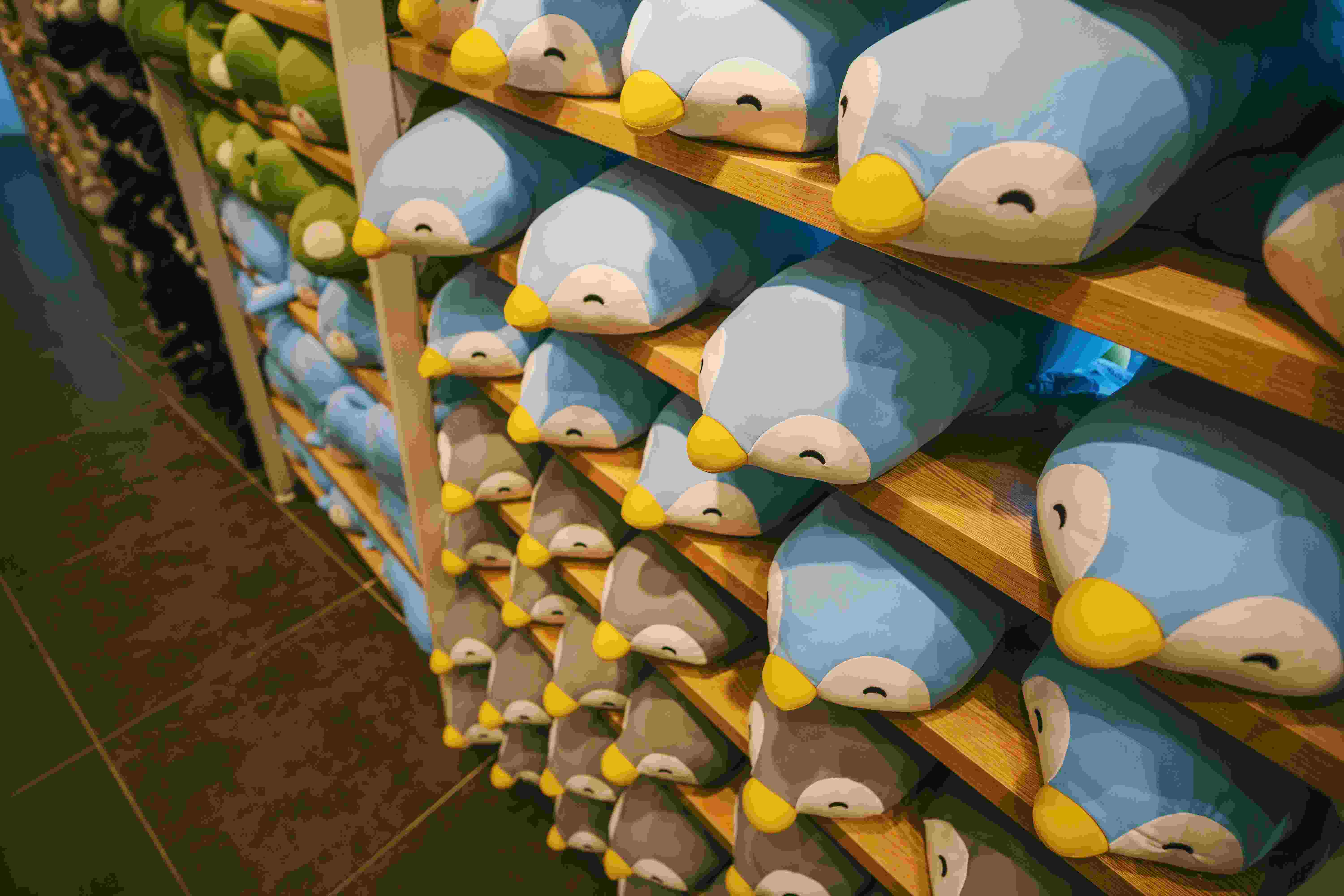
Plush toys are one of the clearest examples of products that can communicate their appeal visually.
A well-designed plush toy does not need a complicated explanation. Its character, facial expression, color, shape, and texture can immediately communicate whether it is cute, funny, unusual, comforting, or collectible.
For retailers, the advantage is that the product itself can become the main visual content.
However, not every plush toy has the same shelf impact. A generic animal may blend into a large assortment, while a plush character with an unusual silhouette, expressive face, distinctive color combination, or recognizable theme can create a stronger stopping point.
When selecting plush products, consider:
-
Whether the character is recognizable from several feet away
-
Whether the shape looks appealing without being handled
-
Whether the design works for both physical and online presentation
-
Whether multiple characters can be displayed as a group
-
Whether the packaging, hangtag, or label explains any special feature clearly
This makes plush particularly useful for gift stores, toy shops, impulse areas, seasonal displays, and other retail environments where products need to communicate quickly.
2. Puzzles With Clearly Defined Play Value
Puzzles can also work well without a live demonstration because the customer already understands the basic activity.
The challenge for retailers is not explaining what a puzzle is. It is making the specific puzzle interesting.
Visual differentiation becomes important here.
A colorful puzzle image, unusual format, age-appropriate challenge, or distinctive theme can help customers understand what they are getting. For example, a shaped puzzle, educational puzzle, 3D puzzle, or puzzle featuring a visually strong theme may communicate more information from the package than a plain product photo.
For wholesale buyers, puzzles can also provide assortment flexibility. Different difficulty levels, themes, piece counts, and formats allow a retailer to build a collection without requiring every SKU to be individually demonstrated.
The key is to choose products where the packaging gives enough information for the customer to understand the basic experience.
3. Novelty and Impulse Toys With an Obvious Hook
Novelty toys are particularly suited to demonstration-light selling because their appeal often comes from one immediately recognizable idea.
The product might have an unusual shape, humorous appearance, surprising texture, exaggerated design, or playful concept. The customer may not know every detail, but they can understand the basic reason the product is interesting.
This is especially useful in:
-
Checkout areas
-
Gift shops
-
Party stores
-
Small independent toy stores
-
Seasonal displays
-
Countertop merchandising
-
Low-price impulse sections
For these products, visual communication matters more than long descriptions.
A customer should be able to look at the item and think, "I know what this is for," or at least, "I want to pick this up and see what it is."
The distinction is important. A novelty toy does not necessarily need to explain everything immediately. It needs to create enough curiosity for the customer to investigate further.
4. Dolls and Pretend-Play Toys With a Complete Visual Story
Dolls and pretend-play products can also perform without extensive demonstrations when the product presents a complete play scenario.
A doll dressed as a doctor, chef, student, athlete, or fantasy character already communicates a story. Accessories can reinforce that story.
The same principle applies to pretend-play sets. A miniature kitchen, beauty set, tool set, doctor kit, or shopping set can communicate its purpose through the objects included in the package.
This is particularly useful when the packaging shows the complete assortment.
Instead of requiring an employee to explain every component, the customer can visually understand what comes with the product and imagine a play scenario.
For retailers, this also creates opportunities to merchandise products by theme rather than simply by product type.
For example, a "pretend clinic" section can combine doctor kits, dolls, role-play accessories, and related products. Customers understand the concept through the assortment itself.
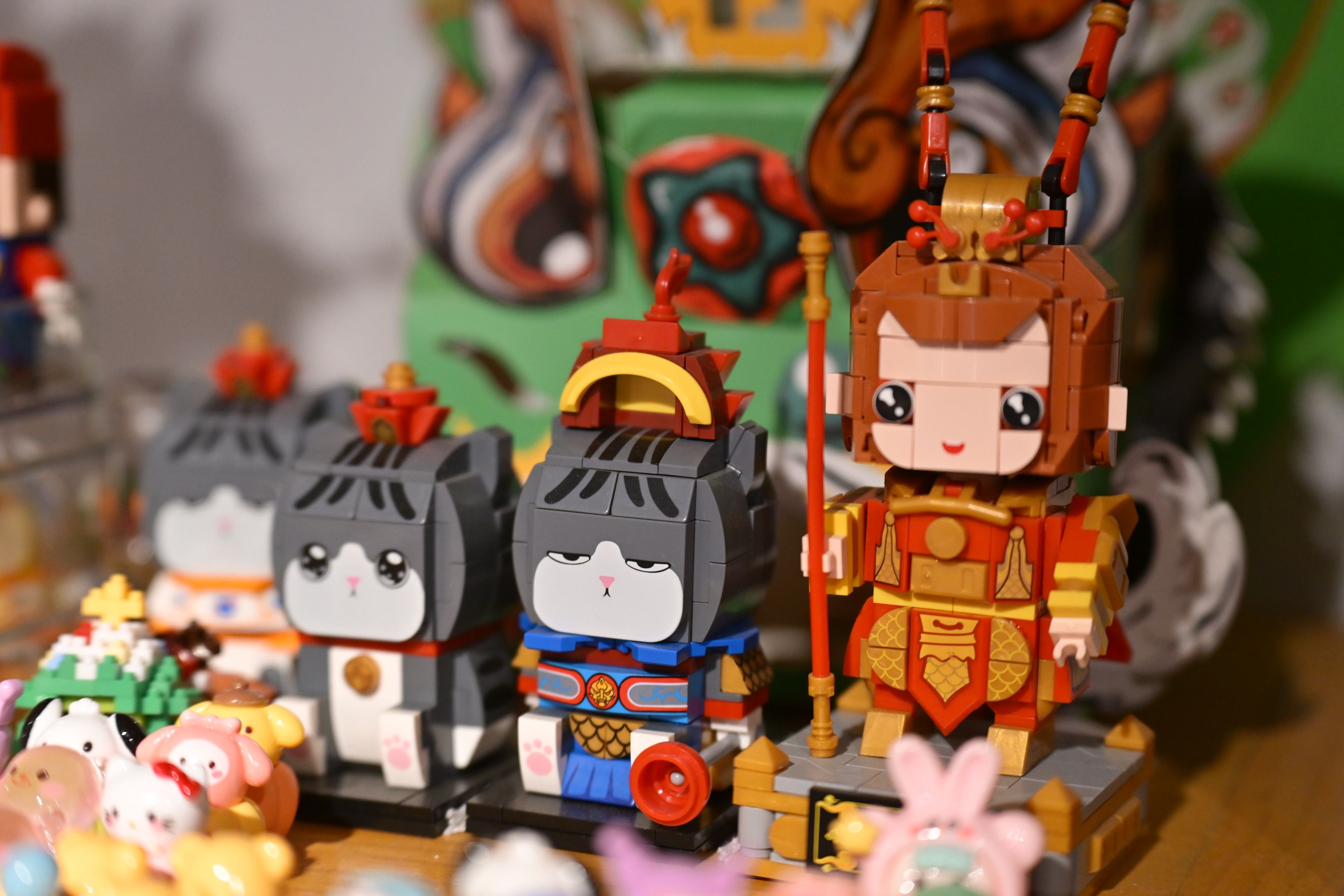
5. Building and Construction Toys With a Clear Finished Result
Building toys sometimes require explanation, but they can become much easier to sell when the finished result is visually compelling.
The product image should answer a simple question:
What can I make with this?
If the package clearly shows the completed vehicle, animal, building, character, or other object, the customer has a concrete target to understand.
This is more effective than presenting a box full of components without showing the possible result.
For B2B buyers, construction toys with visually strong finished models can also work well in e-commerce because the final product becomes the main image used to communicate value.
The more clearly the finished result is presented, the less the customer has to imagine before understanding the product.
6. Art and Craft Kits With Everything Visible
Art and craft products can be difficult to explain if the customer cannot see what is included. The opposite is also true.
A well-organized craft kit can almost demonstrate itself through its contents.
If customers can see the materials, colors, tools, and finished examples, they can quickly understand the activity.
For example, a kit that visibly contains multiple colors, accessories, and a finished sample gives customers an immediate sense of what they can create.
This makes packaging especially important.
For retail buyers, look for craft products that communicate:
-
What children make
-
What materials are included
-
Approximately how much activity the kit provides
-
The recommended age range
-
The main creative skill or activity
Clear communication reduces the amount of explanation required at the shelf.
7. Sensory and Tactile Toys With a Visible Physical Appeal
Some toys are difficult to explain verbally but easy to understand physically.
Squishy toys, stretchy toys, textured toys, fidget products, and other tactile products can attract attention because their physical properties are part of their appeal.
In a physical store, customers may naturally want to pick them up. Even when a demonstration is unavailable, the product's shape and packaging can suggest the intended interaction.
For online selling, however, retailers need stronger visual communication. Product photography should show the texture, size, shape, and intended interaction as clearly as possible.
This is a useful reminder that "no product demonstration" does not mean "no product communication."
The product still needs to communicate. It simply does so through design, packaging, photography, and familiar play behavior rather than a salesperson.
8. Small Vehicles and Die-Cast Toys With Strong Visual Recognition
Vehicles can be relatively easy to understand because the object itself is familiar.
A miniature car, truck, motorcycle, construction vehicle, or aircraft can communicate its identity without a detailed explanation. Strong colors, recognizable vehicle forms, and realistic details can create interest before a customer reads the packaging.
For retail businesses, small vehicle toys also have practical merchandising advantages. They can be displayed individually, grouped by theme, placed in countertop areas, or included in larger vehicle collections.
For wholesale buyers, the assortment can be expanded through different vehicle types, scales, colors, themes, and price levels without requiring a separate demonstration for every SKU.
How to Build a Demonstration-Light Toy Assortment
If you are sourcing toys for a retail business, do not evaluate every SKU separately. Look at the overall assortment.
A useful approach is to divide products into three groups.
Group 1: Self-explanatory products
These products communicate their basic purpose immediately. Examples may include character plush, familiar puzzles, die-cast vehicles, and clearly presented pretend-play sets.
Group 2: Curiosity-driven products
These products may not explain every detail immediately, but their appearance creates enough interest for customers to investigate. Novelty toys and unusual sensory products can fit here.
Group 3: Demonstration-dependent products
These products may have strong features but require movement, sound, setup, or explanation to show their full value.
There is nothing wrong with Group 3. The point is balance.
A strong retail assortment does not need every product to "sell itself." Instead, demonstration-light products can provide dependable shelf communication while more complex products receive additional support through videos, displays, staff recommendations, QR codes, or online product content.
This approach can be particularly useful when a business operates across several sales channels. A product that communicates clearly from a shelf can often be adapted more easily to an e-commerce listing, marketplace image, catalog page, or social media post.
What to Check Before Placing a Wholesale Order
Before committing to a new toy assortment, ask a few practical questions:
Can the product be understood in five seconds?
If a customer needs a long explanation before understanding the basic idea, the product may need stronger packaging or merchandising support.
Does the product photograph well?
A product that looks attractive only when demonstrated may be harder to sell online.
Is the play value visible?
The customer should be able to identify what makes the product enjoyable, useful, funny, creative, collectible, or interesting.
Does the packaging support the product?
Even a good toy can become difficult to sell when its packaging hides the product or fails to explain its core feature.
Can it fit multiple retail environments?
Products that work in toy stores, gift shops, checkout displays, e-commerce catalogs, and seasonal assortments can provide more flexibility for a B2B business.
The goal is not simply to find a "best-selling toy." It is to identify products whose design, presentation, and play concept work together.
Why Source These Toys From ZHORYA?
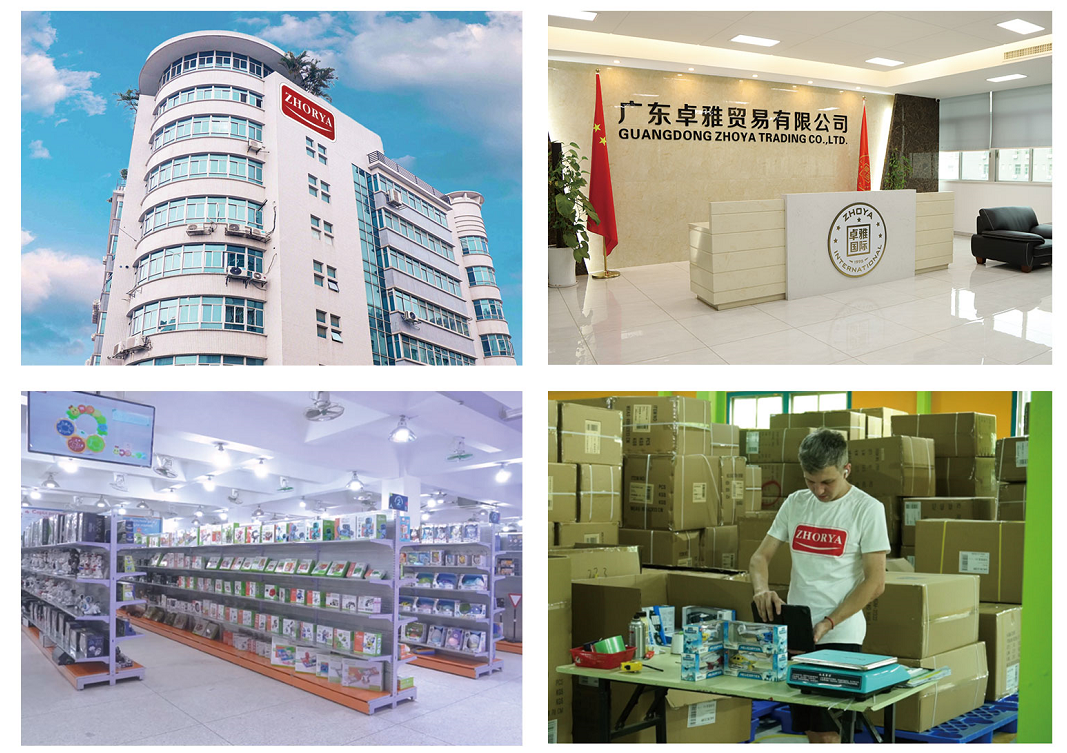
ZHORYA is a China-based toy supplier with a broad selection of toys across multiple categories. You can source plush toys, puzzles, dolls, novelty toys, vehicles, educational toys, and more in one place.
Why ZHORYA?
- Wide product selection — Explore a large range of toy categories and styles for different business needs.
- Flexible sourcing — Find both ready-to-order products and customized OEM/ODM options.
- B2B experience — ZHORYA serves wholesalers, importers, distributors, retailers, and e-commerce sellers in global markets.
- Export and logistics support — Get support for international wholesale sourcing and shipping.
Instead of sourcing each toy category from different suppliers, you can build a broader assortment with ZHORYA and select products that are easy for customers to understand at a glance.
Looking for demonstration-light wholesale toys? Explore ZHORYA's catalog and find products suited to your market and sales channels.
Get Your Free Quote
We will reply within 24 hours.