Login
Join Free
Categories
My Orders
Wish
Cart
0m³/0m³

English
English
 Русский язык
 中文
中文
Toys That Pair Well Together in Retail Displays
2026-08-20 15:54:47
Retail toy displays work best when products are presented as connected choices rather than isolated items. A shopper who notices one toy should be able to understand what other products belong beside it, whether they offer a different play experience, a natural add-on, or a simple way to build a larger purchase.
For retailers, this means product pairing is more than a visual merchandising technique. The right combination can make limited shelf space more productive, create clearer shopping journeys, and give customers more reasons to explore a category.
Instead of placing similar toys randomly across a shelf, retailers can build small product stories around age, activity, theme, play pattern, price point, or occasion. This approach is especially useful when managing a broad toy assortment with many SKUs.
Why Toy Pairing Matters in Retail Displays
A retail shelf has limited space, but customers have unlimited choices. If every product appears unrelated to the products around it, shoppers have to do the work of figuring out what belongs together.
Effective product pairing reduces that friction.
For example, a small construction vehicle can sit beside a construction play set, miniature accessories, or a related role-play item. A puzzle can be displayed near a matching educational game. Outdoor activity toys can be grouped with other products designed for the same type of active play.
The goal is not simply to place more products together. It is to create a logical relationship that a shopper can understand immediately.
Good pairings usually answer one of these questions:
-
What else can I use with this toy?
-
What other toy offers a similar play experience?
-
What product would make a good gift alongside this one?
-
What can I buy for the same child or age group?
-
What other item fits the same theme or occasion?
When the answer is obvious from the display, the assortment becomes easier to shop.
Toy Combinations That Work Well on the Same Display
1. Vehicles and Accessories
Toy vehicles are among the easiest products to build into a coordinated display.
A basic die-cast car, construction vehicle, racing car, or pull-back vehicle can be positioned with complementary products such as garages, road play sets, ramps, signs, small figures, or vehicle-themed accessories.
The key is to avoid making the display look like a collection of unrelated vehicle SKUs. Instead, create a recognizable play environment.
For example, construction vehicles can be displayed together with construction-themed play accessories. Racing vehicles can share a section with tracks or racing-related toys. Emergency vehicles can be grouped with police, fire, or rescue-themed products.
This type of pairing gives shoppers a reason to look beyond the first product they notice.
2. Dolls and Doll Accessories
Dolls naturally create opportunities for complementary merchandising.
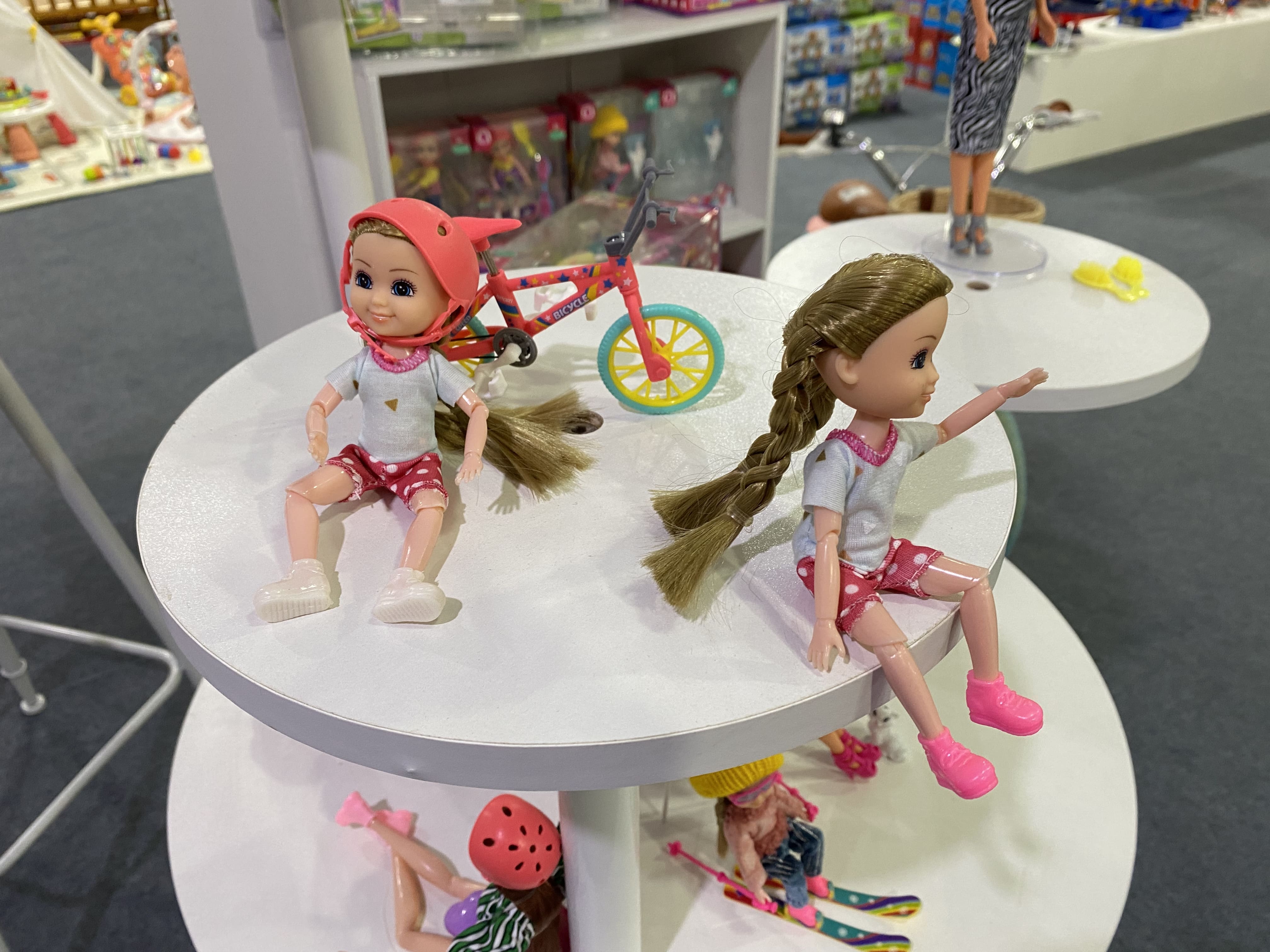
A doll can be displayed with doll clothing, furniture, play accessories, miniature household items, bags, or themed role-play products. Rather than placing every doll in one large section, retailers can create smaller scenes that demonstrate how the products work together.
For example, a doll dressed for an outdoor activity can be placed near related accessories. A fashion doll can be presented with clothing or styling items. A dollhouse-oriented product can be surrounded by miniature furniture and household accessories.
The display itself becomes a visual demonstration of play.
This is particularly useful for products where customers may not immediately understand the purpose of smaller accessories. Seeing the products together gives those accessories context.
3. Puzzles and Educational Games
Educational products can be paired according to learning activity rather than simply by brand or product type.
Puzzles can sit beside matching educational games, memory games, counting toys, alphabet products, or other problem-solving activities.
For younger children, a display might focus on basic matching, shapes, colors, and recognition. For older children, the same merchandising principle can shift toward logic games, strategy activities, STEM-oriented toys, or more complex puzzles.
The important point is to create a clear reason for the grouping.
A shelf labeled around a learning theme can be easier to navigate than a shelf containing a random assortment of educational SKUs.
4. Building Toys and Creative Play Products
Construction toys pair well with other products that extend creative play.
Building blocks, magnetic construction sets, model-building products, and similar toys can be positioned alongside complementary creative products or different construction formats.
For example, a retailer could create a "Build and Create" section featuring several types of construction activities at different price points.
This strategy is useful because customers do not necessarily need to buy identical products. A child who enjoys one type of building activity may also be interested in another.
Retailers can therefore use the display to introduce shoppers to adjacent product categories.
5. Arts, Crafts, and Pretend Play
Creative products can also be merchandised around an activity.
Craft kits, drawing toys, modeling products, pretend-play sets, and DIY-oriented toys can share a display when they appeal to a similar customer need.
For example, a creative-play display could include a main activity kit surrounded by smaller accessories or alternative activities.
The advantage is that the shopper sees an entire activity rather than a single SKU.
This can be particularly effective for seasonal displays, holiday merchandising, rainy-day activities, and gift-oriented sections.
6. Outdoor Toys That Share the Same Play Occasion
Outdoor toys are another category where product pairing can make a display more useful.
Balls, flying discs, beach toys, water-play products, sports toys, and other active-play items can be grouped according to the occasion in which customers are likely to use them.
A summer-oriented display might combine several types of outdoor activity toys rather than separating every product into its own category.
For example, beach-oriented products can be displayed together, while backyard activity products can form another group.
The merchandising principle is simple: organize around the customer's planned activity, not only the supplier's product classification.
7. Plush Toys and Small Gift Items
Plush toys can work particularly well in gift-oriented displays.
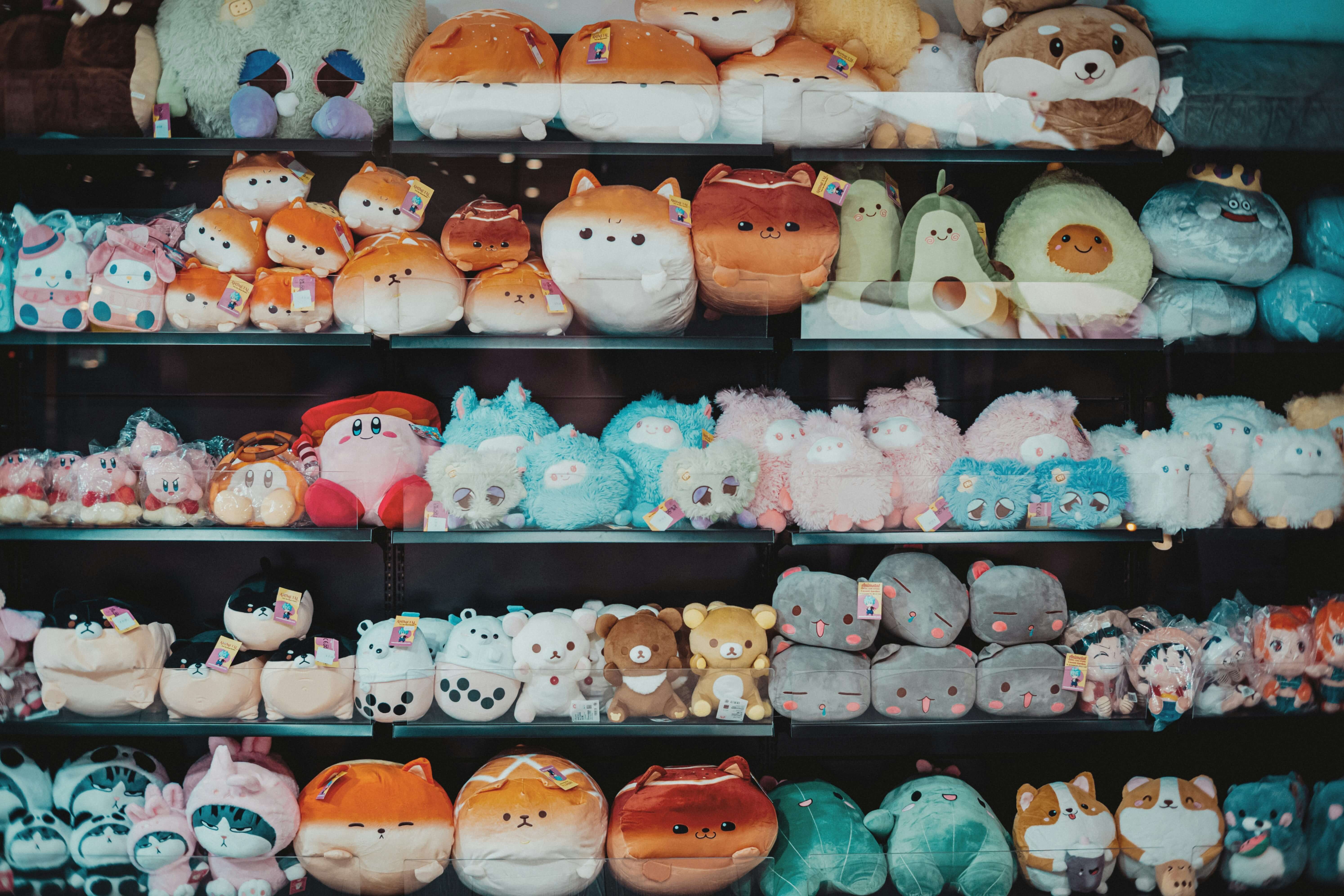
A large plush item can serve as the visual anchor, while smaller plush toys, novelty items, keychain-style products, or themed gifts can fill surrounding shelf space.
Retailers should pay attention to scale when creating this type of display. If every product is the same size, the shelf may look flat. Combining larger visual anchors with smaller products can create stronger visual hierarchy.
This does not necessarily require expensive fixtures. Product height, packaging shape, and positioning can create much of the effect.
8. Low-Price Add-Ons Beside Higher-Value Toys
Not every pairing needs to be based on function.
Price can also create a useful relationship.
A retailer may place lower-priced toys near a higher-priced main product to give shoppers additional choices across different budgets. This is especially practical in gift sections, seasonal displays, and checkout-adjacent areas.
For example, a larger play set could be surrounded by smaller toys that appeal to shoppers looking for a lower-cost gift.
The objective is not to force a purchase. It is to make the assortment easier to explore.
How to Arrange Paired Toys on the Shelf
Think About Shelf Space Before Choosing the Pairing
A product pairing may look attractive in a product catalog but fail on a physical shelf.
Before finalizing a display, consider:
-
Package dimensions
-
Product height
-
Shelf depth
-
Hanging versus standing packaging
-
Weight
-
Visibility from different angles
-
Restocking requirements
-
Number of facings
-
Price-point distribution
A successful display should be attractive when fully stocked and still understandable when several units have been sold.
Leave Room for Product Movement
Retail displays are not static.
Products sell at different speeds, and the best-performing SKU may create an empty space before slower items move. A good pairing system should therefore be flexible enough for staff to replenish products without destroying the visual logic of the display.
Retailers can create modular groupings that can expand or contract depending on demand.
For example, a popular vehicle can receive additional shelf space while less popular accessories remain nearby. The overall theme stays intact even as individual facings change.
Refresh Pairings Instead of Rebuilding the Whole Display
Retailers do not always need a completely new merchandising concept.
Sometimes changing the pairing is enough.
A vehicle display can shift from "cars and trucks" to "construction play." A puzzle section can move from general puzzles to travel activities. Outdoor toys can transition from summer play to sports-focused merchandising.
This gives retailers a practical way to refresh the store without completely replacing the assortment.
A Practical Framework for Choosing Toy Pairings
When deciding which toys should sit together, use five simple criteria:
1. Play relationship: Can customers understand how the products relate?
2. Customer relationship: Are the products likely to interest the same shopper?
3. Space relationship: Can the products physically share a display efficiently?
4. Price relationship: Do the products provide useful choices across different budgets?
5. Visual relationship: Do the packages create a coherent shelf presentation?
If a pairing performs well across these five areas, it has a stronger chance of creating a useful retail display.
Build a More Flexible Retail Toy Assortment With ZHORYA
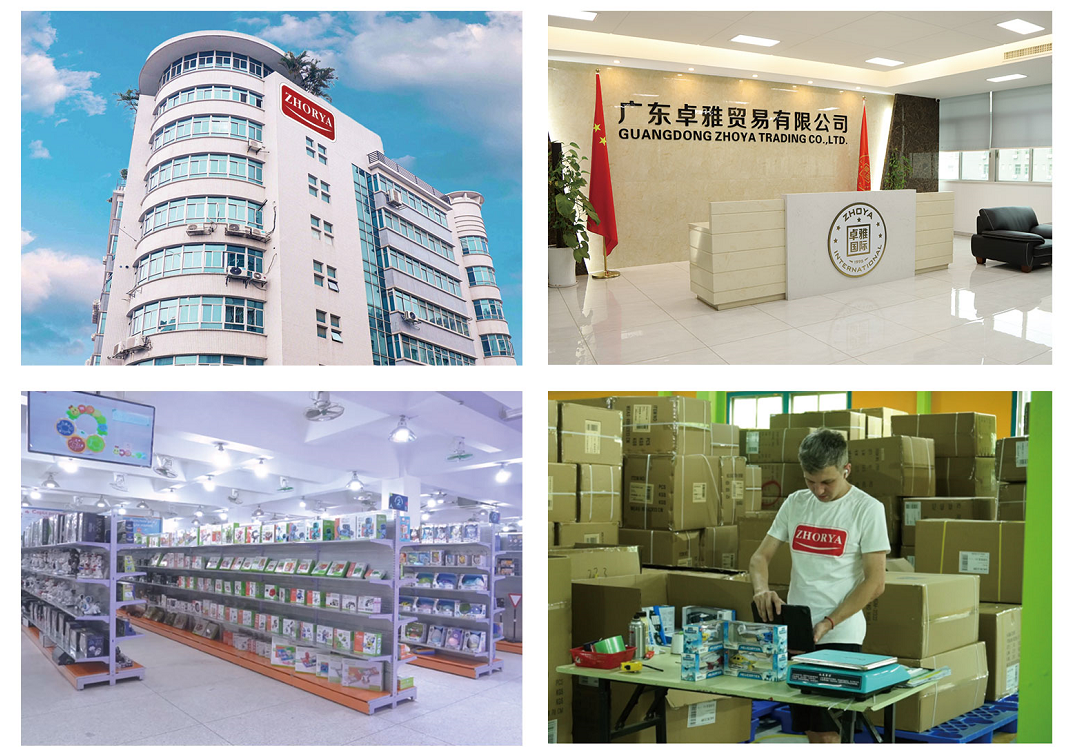
The right toy pairings start with the right assortment. ZHORYA is a China-based wholesale toy supplier offering a wide range of toys for retailers, wholesalers, importers, distributors, and e-commerce sellers.
Our product range spans multiple toy categories, from educational, electronic, plush, doll, vehicle, game, puzzle, outdoor, sports, and novelty toys to many other products for different retail needs.
With a broad selection of SKUs, ZHORYA makes it easier to source complementary products for themed displays, different price points, and seasonal assortments. OEM/ODM services are also available for customized toys and packaging.
Looking for toys to build your next retail display? Contact ZHORYA to explore our product range and find the right products for your assortment.
Get Your Free Quote
We will reply within 24 hours.