Login
Join Free
Categories
My Orders
Wish
Cart
0m³/0m³

English
English
 Русский язык
 中文
Toy Product Differentiation: How to Stand Out in a Crowded Toy Market
2026-10-15 08:59:47
The toy market is full of products that share similar functions, designs, and price points. A remote-control car, for example, may compete with dozens of other vehicles offering comparable speeds, shapes, and features. A plush toy may look much like many others on the shelf. Even a new product can quickly lose its appeal when similar versions become widely available.
For toy importers, wholesalers, and retailers, this creates an important challenge: finding new products is not enough. The products also need to offer something that makes them recognizable and relevant to their target customers.
Toy product differentiation does not always require a completely new invention or advanced technology. A different play pattern, a distinctive design, an engaging theme, or a more thoughtful combination of features can give a familiar toy a new identity.
Understanding these differences can help buyers evaluate new toy products more carefully and build a product range with greater variety.
Why Similar Toy Products Face More Competition
Toy manufacturing allows familiar concepts to be developed in many variations. Once a particular design or play pattern attracts attention, similar products may appear with different colors, shapes, accessories, or packaging.
This gives buyers more options, but it also makes product selection more complicated.
When several products look almost identical, customers may have little reason to choose one over another. Price, availability, and delivery time can then become the main points of comparison.
For retailers and wholesalers, purchasing another version of an existing product may add to the SKU count without adding much meaningful variety.
This does not mean that similar products have no commercial value. Familiar designs can appeal to established customer preferences, and different price points can serve different market segments. The challenge is to understand whether a new product fills a genuine need or simply duplicates something already available.
A useful starting point is to compare a potential new item with the products already in the range. What does it do differently? Who might prefer it? Does it introduce a new play experience, visual style, size, or price position?
The answers can reveal whether the product offers a meaningful reason for inclusion.
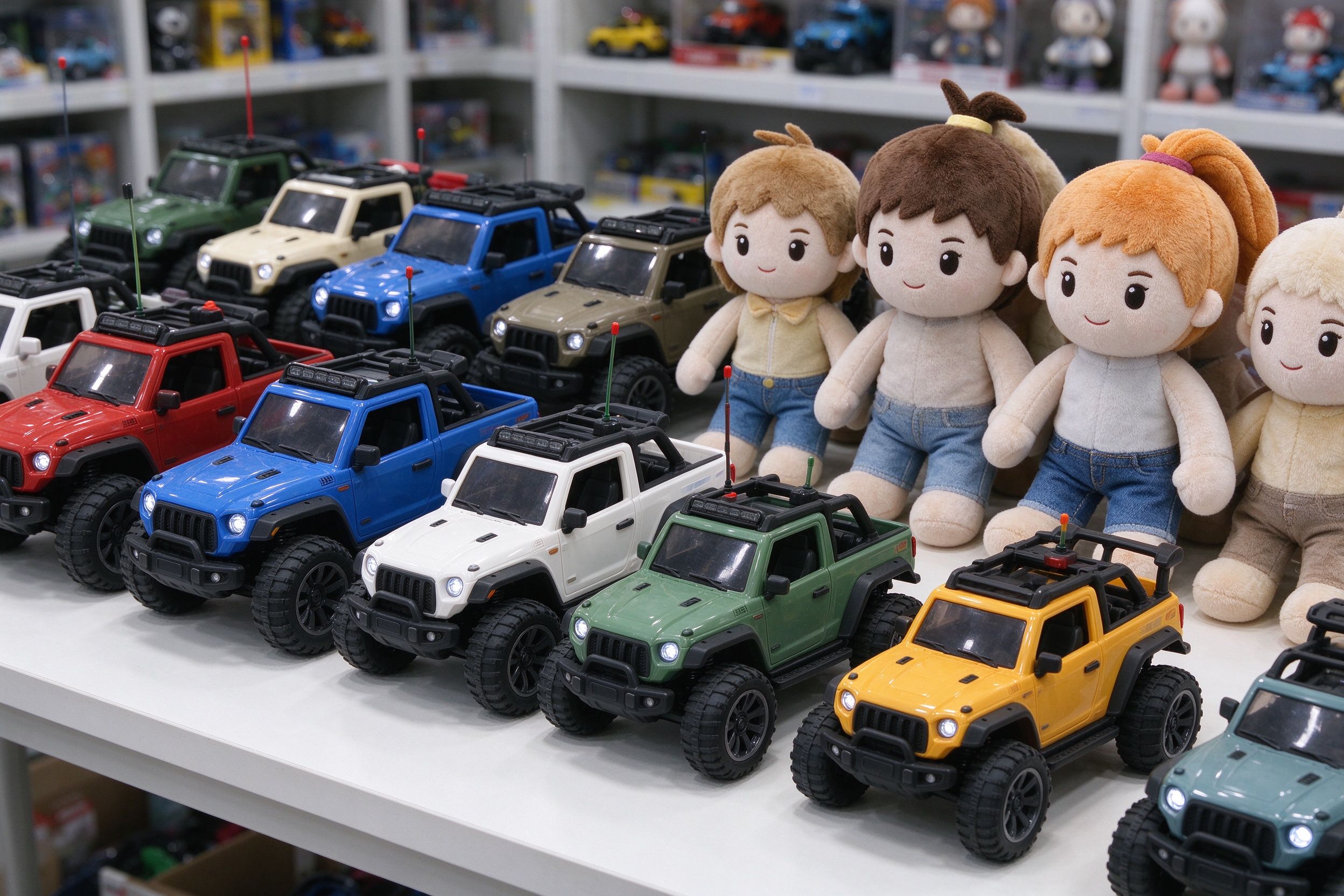
How Toy Products Can Stand Out in a Competitive Market
1. Product Design Can Make Familiar Toys Feel Different
A toy does not need an entirely new function to stand out. Sometimes, its visual design is the first thing that distinguishes it from competing products.
Color combinations, shapes, facial expressions, surface details, and overall proportions can all influence how a toy is perceived. Two products may serve the same basic purpose but appeal to different preferences because of their appearance.
Consider toy vehicles. Some designs emphasize realistic proportions and details, while others use exaggerated shapes, bright colors, or fantasy-inspired styling. Both can belong to the same category, yet they create different impressions.
The same principle applies to dolls, plush toys, figures, and building toys.
For buyers, the important question is not simply whether a design looks attractive. It is whether the design fits the intended audience and selling environment.
A detailed miniature vehicle may suit a collection-oriented product range, while a brightly colored vehicle with oversized features may be more suitable for a playful, novelty-focused display. A plush toy with a distinctive expression may appeal to customers looking for a character gift rather than a conventional stuffed animal.
When reviewing new products, buyers should look beyond the category name and consider the visual identity of each item.
2. Different Play Patterns Create New Product Value
Product differentiation can also come from the way a toy is used.
A basic toy may offer one main activity, while another product in the same category introduces additional ways to play. These differences can change the experience without requiring the product to belong to a completely new category.
For example, a building toy may focus on following instructions to create a specific model. Another may use similar pieces but allow users to build different structures. A toy vehicle may be designed mainly for movement, while another includes obstacles, accessories, or a setting that encourages more imaginative play.
Interactive toys provide another example. Some rely on lights and sounds, others respond to buttons or movement, and more advanced products may include voice interaction or AI-powered features.
These functions are not interchangeable. A simple sound effect can be enough to support a product's intended play pattern, while an AI-enabled toy may introduce additional technical requirements and ongoing service considerations.
The right choice depends on the product's purpose and intended users, not on how many features it contains.
For buyers exploring new toy products, it is worth asking what the user actually does with the toy and whether that experience differs meaningfully from existing options.
3. Themes and Characters Can Expand a Product Line
A recognizable theme can give a familiar toy concept a different identity.
Animals, food, fantasy, vehicles, occupations, sports, and everyday objects can all provide inspiration for toy designs. The same basic format can take on a different appeal when its theme, character, or setting changes.
Consider a set of small figures. Animal figures, fantasy characters, and occupation-themed figures may share a similar size and construction, but each creates different possibilities for display, collecting, storytelling, or imaginative play.
Themes can also connect several products within a range. Related figures, accessories, playsets, and vehicles can form a coherent series rather than a collection of unrelated items.
For importers and retailers, this creates opportunities to build variety within an established category. Instead of introducing an entirely new type of toy, a buyer may be able to explore a different theme or a related product series.
However, not every theme needs to become a large collection. Before expanding a series, buyers should consider whether the products have a clear connection, whether the theme suits their customers, and whether the additional items offer enough variety to justify their place in the range.
4. Features Should Solve a Real Product Need
Adding features is another way to differentiate a toy, but more features do not automatically create a better product.
Lights, sounds, moving parts, sensors, remote controls, and connected functions can all contribute to the play experience. Their value depends on how well they support the product's main purpose.
For instance, lights may make a vehicle more engaging in a dim environment, while a remote control gives users a more active role in operating it. A toy with multiple construction options may encourage experimentation, whereas an electronic toy with complicated controls may create unnecessary friction for its intended age group.
AI-powered features introduce a different set of considerations. Buyers may need to examine language support, connectivity, content management, data privacy, and the cost of maintaining digital services.
These details matter because a feature that looks impressive in a demonstration may not remain useful during everyday play.
When evaluating a product, buyers should distinguish between features that improve the experience and features that merely increase complexity. The strongest product concept is not necessarily the most technologically advanced. It is the one whose design and functions work together to deliver a clear purpose.
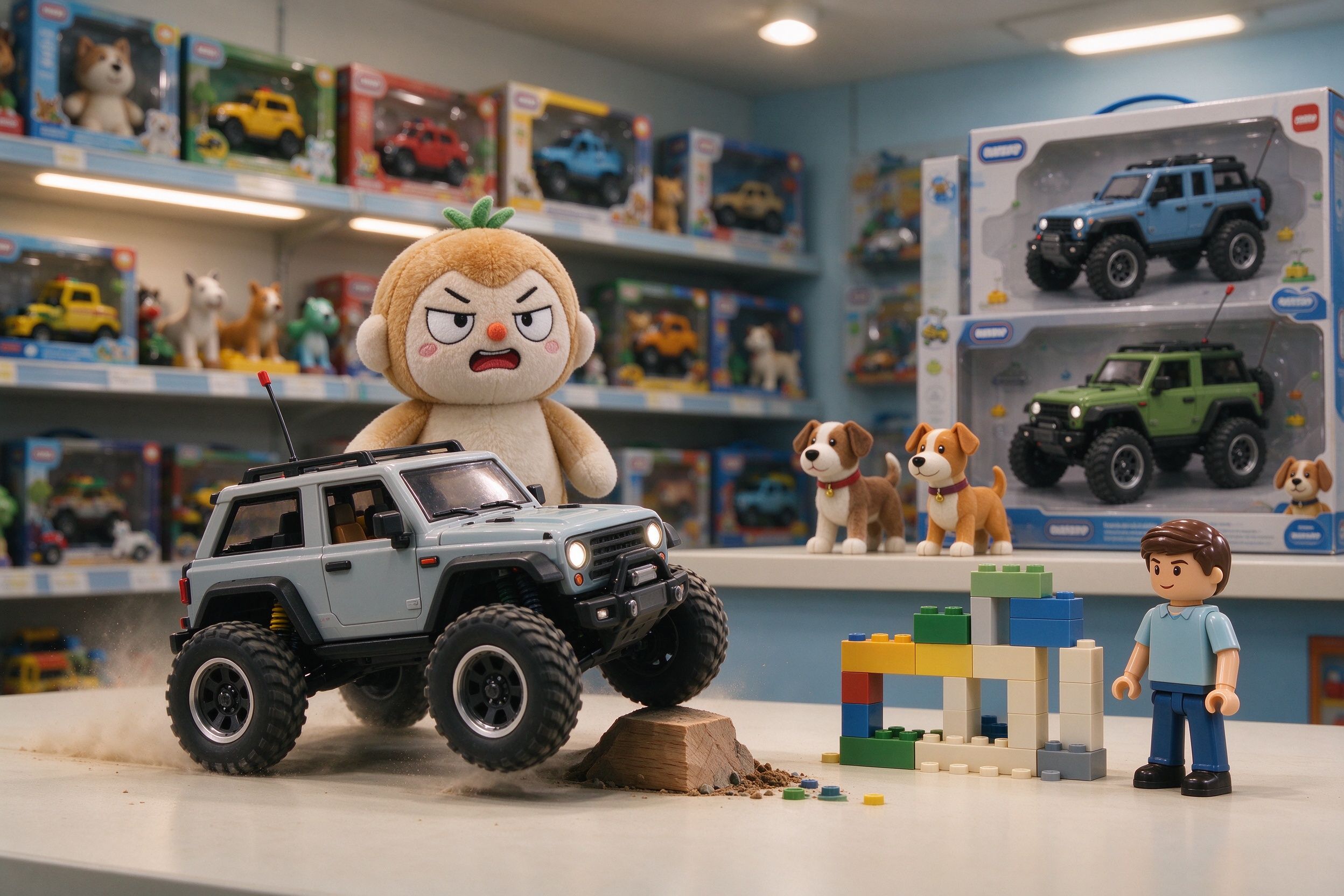
How Buyers Can Evaluate Product Differentiation
A new product may look different without offering a meaningful advantage. A structured comparison can help buyers separate genuine differences from minor variations.
Before adding a product to a range, consider the following questions:
-
Design: Does the product have a distinctive visual identity, or does it closely resemble existing items?
-
Play experience: Does it introduce a different activity, interaction, or way to use the toy?
-
Target audience: Does it suit a customer group that is not adequately covered by the current range?
-
Features: Do its functions contribute to the intended experience?
-
Theme: Does it introduce a relevant theme or complement an existing product series?
-
Format and packaging: Does its size, presentation, or configuration suit the intended retail channel?
-
Price positioning: Does it fill a useful price point without duplicating another product's role?
-
Practical requirements: Are safety documentation, quality expectations, lead times, and other purchasing requirements clear?
These questions do not guarantee that a product will perform well. Consumer preferences, market conditions, competition, and execution all influence commercial results.
They do, however, provide a more useful basis for comparison than selecting products solely because they look new or follow a visible trend.
How ZHORYA Toys Supports Your Product Differentiation
ZHORYA Toys offers a broad range of toys to help you explore different product designs, play patterns, themes, and features for your business. You can benefit from:
-
A Wide Range of Toy Categories: Explore over 2 million SKUs across multiple toy categories to find new designs and product types for your existing range.
-
Product Customization: Customize logos and packaging, or explore exclusive molds, circuits, and sound modules through OEM and ODM services, depending on your project requirements.
-
Different Designs and Features: Compare toys with different appearances, functions, themes, and play experiences to find options that suit your target market.
You can contact ZHORYA Toys to discuss suitable product options and customization requirements for your business.

Conclusion
In a crowded toy market, product differentiation is not simply about launching something unusual. It is about understanding what makes a product distinct and whether that difference matters to its intended audience.
Design, play patterns, themes, features, packaging, and product formats can all create meaningful variation. For buyers, comparing these elements helps reveal whether a new item adds genuine value to the existing range or simply repeats what is already available.
A thoughtful product range does not need to contain every new trend. It needs a clear reason for each product's place within it.
When exploring new toy products, focus on the differences that matter to your customers, assess the practical requirements, and choose products that complement the range you want to build.
Explore the toy categories available from ZHORYA Toys to identify products that fit your market and purchasing needs.
Get Your Free Quote
We will reply within 24 hours.