Login
Join Free
Categories
My Orders
Wish
Cart
0m³/0m³

English
English
 Русский язык
 中文
中文
Toy OEM vs ODM: What’s the Difference?
2026-08-03 08:59:40
When sourcing customized toys, buyers often come across two terms: OEM and ODM. Although they are sometimes used interchangeably, they describe different approaches to product development and manufacturing.
Understanding the difference between toy OEM and ODM can help importers, wholesalers, distributors, retailers, and emerging brands choose a suitable sourcing model based on their product requirements, budget, order quantity, and customization needs.
This guide explains what OEM toys and ODM toys are, how they differ, what can be customized, how the toy OEM process works, and what buyers should consider before placing an order.
What Are OEM Toys?
OEM stands for Original Equipment Manufacturer.
In toy OEM, the brand provides its own product design, such as drawings, 3D models, or samples, and the factory produces the toy according to the provided design.
The brand owns the product's intellectual property, while the factory is responsible only for the manufacturing process. This model is suitable for established brands with their own product designs and development capabilities.
What Are ODM Toys?
ODM stands for Original Design Manufacturer.
In toy ODM, the factory provides an existing standard design or semi-customized design. The brand can then customize elements such as colors, logos, and packaging based on the existing product.
The factory owns the product design rights, while the brand can use the design within the agreed terms. The toy ODM model is suitable for small and medium-sized wholesalers and emerging brands that want to launch products quickly and reduce tooling costs.
OEM vs. ODM Toys: Key Differences
The main difference between OEM and ODM is who takes the lead in product design and development.
| Factor | Toy OEM | Toy ODM |
|---|---|---|
| Design control | The brand fully controls the design and provides drawings, BOM, and acceptance specifications. | The factory controls the basic design, while the brand can request limited modifications. |
| Intellectual property | Product patents, designs, and mold ownership belong to the brand. The factory is authorized to manufacture the product only. | The basic product design IP belongs to the factory. The brand can use the design within the agreed terms. |
| Initial investment | Higher, as product development and customized tooling may be required. | Lower, as existing designs and molds can often be reused. |
| Time to market | Typically around 4–8 months, depending on the product and development requirements. | Often around 1–3 months when based on an existing design and limited customization. |
| MOQ | Generally higher for fully customized products. | Generally more flexible than fully customized OEM products. |
| Sampling | May require 3–5 rounds of sampling, especially for new product development. | Usually simpler when based on an existing product. |
| Product uniqueness | Higher potential for a distinctive product | The same basic design may be supplied to multiple brands, creating a higher risk of product similarity. |
1. Design Control
OEM: The brand fully leads the product design and provides the factory with complete drawings, a BOM (Bill of Materials), and acceptance specifications. The factory produces the toy according to the agreed design and does not have the right to modify it.
ODM: The factory leads the basic product design. The brand can request limited modifications such as appearance or functions, so the scope of customization is more limited.
2. Intellectual Property
OEM: Product patents, designs, and mold ownership belong entirely to the brand. The factory is authorized only to manufacture the product and cannot copy or resell the design.
ODM: The basic product design IP belongs to the factory, while the brand can use the design within the agreed terms. If the brand requires exclusive rights to the design, an additional buyout may be required.
3. Cost and Initial Investment
OEM: The initial investment is generally higher because the buyer may need to cover product development and customized tooling costs. For plastic toys, mold development is usually a one-time investment. However, the actual cost varies depending on product complexity, materials, number of molds, and manufacturing processes. There is no single standard price, and more complex structures generally require higher tooling costs.
ODM: The initial investment is generally lower because the factory can reuse existing designs and molds. The buyer may mainly need to cover customization costs such as logo printing and packaging.
Some toy ODM suppliers may also waive plate-making or sampling fees when the order reaches an agreed MOQ. The actual charges and terms should be confirmed with the supplier before production.
4. Time to Market
OEM: The development cycle is generally longer because the project may need to go through design, tooling, sampling, and production. Depending on the product and development requirements, a new OEM toy may typically take around 4–8 months to reach the market.
ODM: The development cycle is generally shorter because the product is based on an existing design. An ODM toy may take around 1–3 months from customization to production.
5. Minimum Order Quantity (MOQ)
MOQ varies significantly between suppliers and toy categories. Customized products generally require a higher MOQ than ready-made products.
OEM: Fully customized products generally require a higher MOQ because the supplier needs to account for product development, tooling, and production costs.
ODM: Existing or semi-customized products may offer a more flexible MOQ because the supplier can use an existing design and tooling.
There is no universal OEM or ODM MOQ. Buyers should confirm the specific MOQ with the supplier based on the product and customization requirements.
6. Sampling Time
Sampling can take anywhere from several days to several weeks, depending on the product and customization requirements.
For OEM projects, the product may require 3–5 rounds of sampling before the final sample is confirmed.
ODM sampling is generally simpler when the buyer is working with an existing product and only needs limited customization.
7. Product Uniqueness
OEM: Because the product is developed according to the brand's own design and requirements, OEM provides greater potential for product uniqueness. This can help a brand create differentiated products and build a stronger product identity.
ODM: The basic design may also be supplied to multiple brands, with differences mainly in elements such as logos, colors, or packaging. This creates a higher risk of product similarity between brands.
What Can You Customize in Toy OEM and ODM?
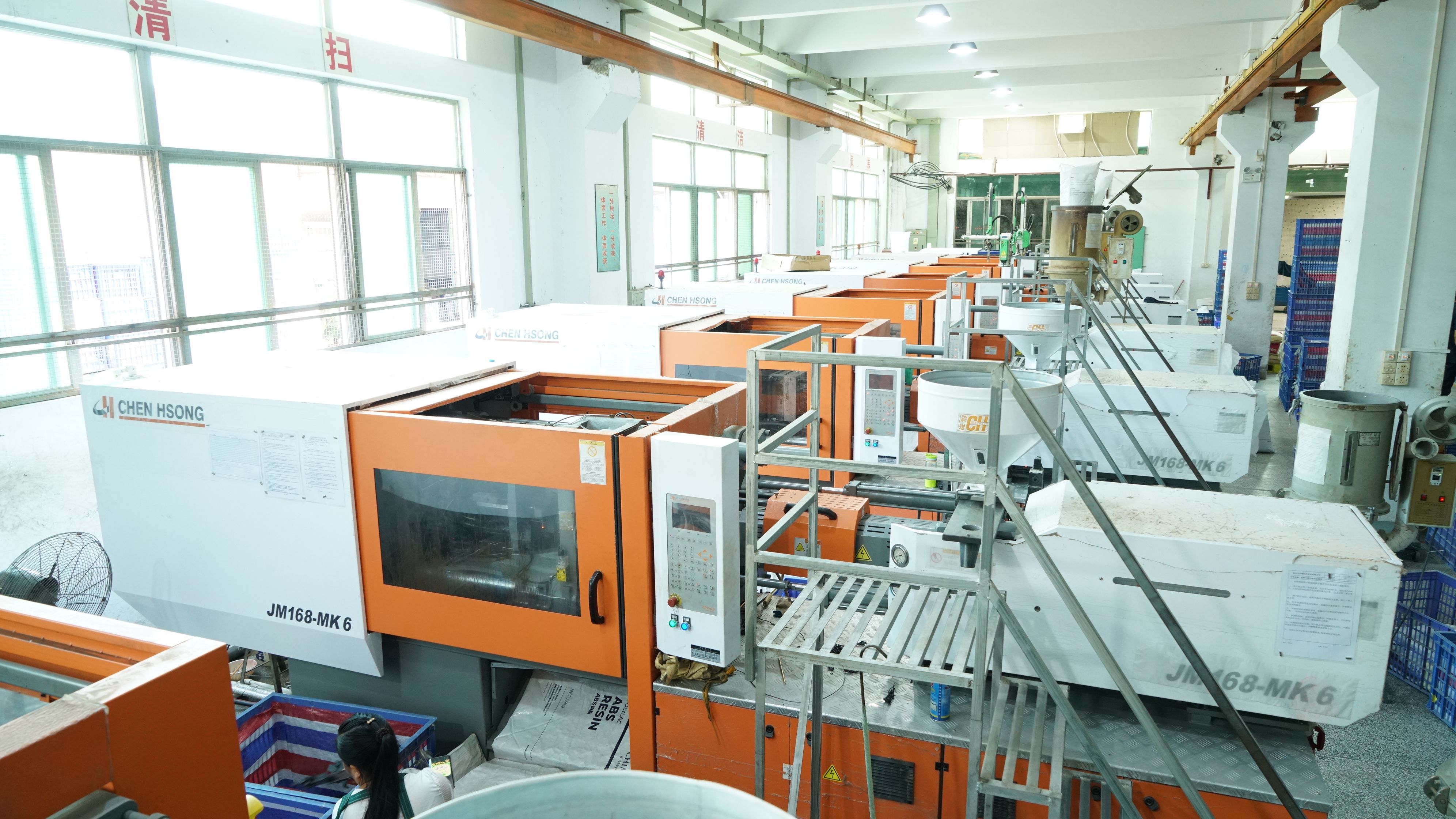
Toy customization can involve much more than simply adding a logo.
Depending on the product and supplier's capabilities, buyers may be able to customize several aspects of a toy.
Appearance
Common appearance customization includes:
-
Product colors
-
Patterns and graphics
-
Product size
-
Exterior shape
-
Materials
-
Surface finishes
The available options depend on the product structure and manufacturing requirements.
Functional Parameters
For electronic or remote-controlled toys, buyers may be able to adjust:
-
Remote-control distance
-
Battery capacity
-
Motor power
-
Lighting effects
-
Sound effects
-
Action modes
These changes should be evaluated according to the product's design and intended use.
Electronic Systems
Electronic toy projects may involve customization of:
-
ICs
-
PCBs
-
Circuit solutions
-
Sensors
-
Chips
-
Other electronic components
The selected components can vary according to the required functions and target product cost.
Programs and Interactive Content
For interactive toys, customization may include:
-
Control programs
-
Lighting programs
-
Voice content
-
Music
-
Language versions
-
Interaction methods
-
Gameplay logic
Logo and Branding
Branding options may include:
-
Laser engraving
-
Screen printing
-
Stickers
-
Logos
-
Hang tags
-
Product labels
The appropriate branding method depends on the material and product design.
Packaging and Instructions
Packaging can also be customized, including:
-
Color boxes
-
E-commerce shipping boxes
-
Display boxes
-
Display stands
-
Carton labels
-
Barcodes
-
Multilingual instruction manuals
Packaging requirements should be confirmed before mass production.
Accessories and SKU Combinations
Buyers may also customize accessory combinations, colors, product versions, and configurations.
For example, a product range may include standard, deluxe, or simplified versions depending on the target market and price positioning.
Safety and Compliance Requirements
Safety and compliance requirements should also be considered during product development.
Depending on the target market and toy category, buyers may need to confirm applicable safety standards, testing requirements, warning labels, and product information before production.
Toy OEM/ODM Process: From Product Idea to Production
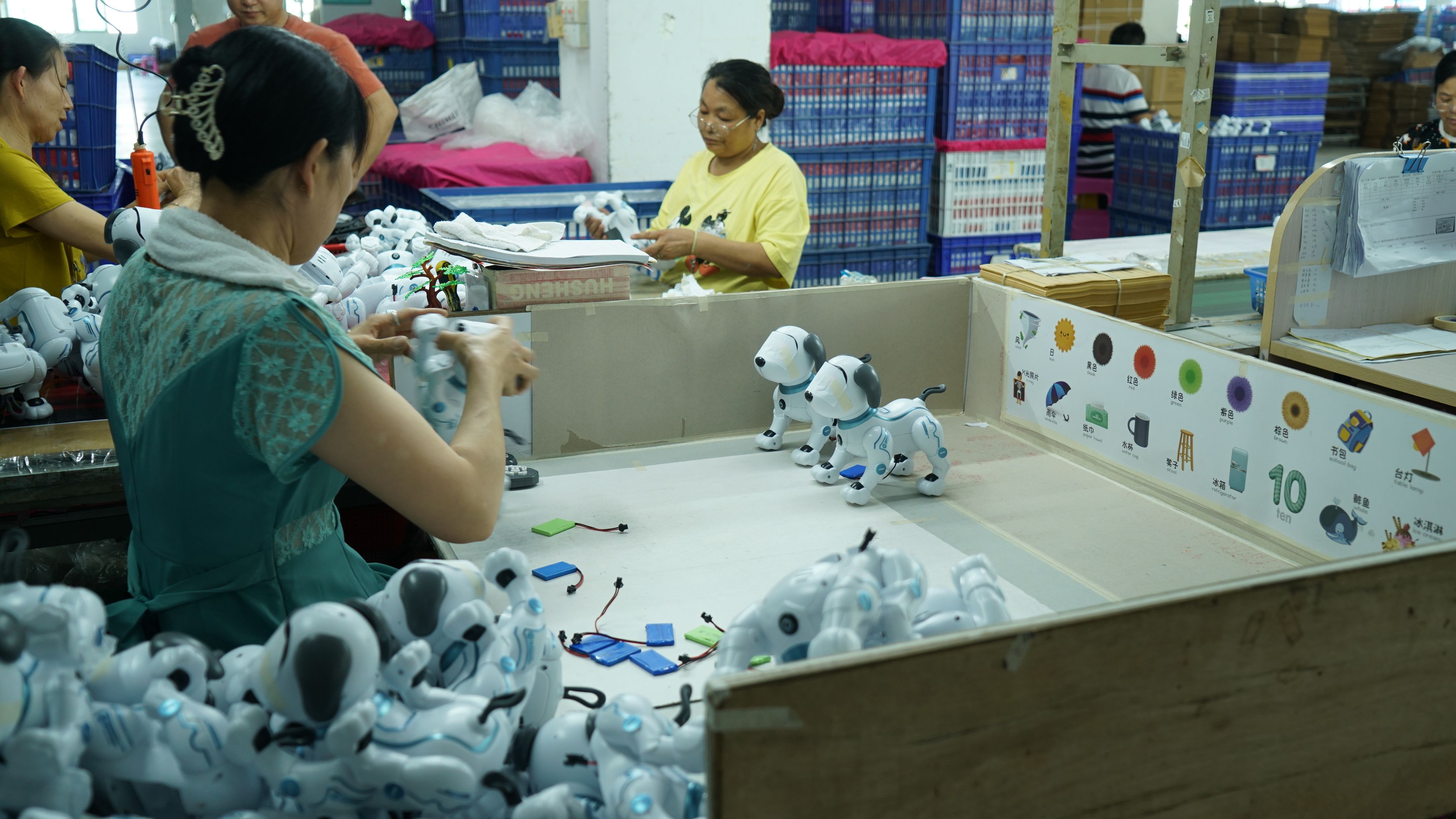
The exact process varies by project, but a typical toy OEM/ODM workflow can be divided into five main stages.
1. Requirement Discussion
The buyer and supplier first discuss the basic project requirements, including:
-
Toy category
-
Target market
-
Order quantity
-
Budget
-
Customization requirements
-
Certification needs
For an OEM project, the buyer should also prepare the available product designs, drawings, samples, or specifications.
2. Product Selection and Sampling
The next step depends on whether the project is OEM or ODM.
For ODM, the buyer can select an existing product and discuss possible improvements or customization.
For OEM, the buyer provides the design or product requirements. If new tooling is required, the supplier can proceed with mold development and sampling after the relevant requirements are confirmed.
3. Sample Confirmation
Before mass production, the buyer needs to check the sample against the agreed requirements.
This can include:
-
Appearance
-
Materials
-
Product functions
-
Packaging
-
Other agreed specifications
Once the sample is approved, the buyer signs the sample confirmation before moving on to mass production.
4. Mass Production
After the product and order details are confirmed, the supplier arranges production according to the agreed schedule.
Quality checks can also be carried out during the production process to identify potential issues before the order is completed.
5. Inspection and Shipment
Before shipment, the finished products can be inspected according to the agreed requirements. Buyers may also arrange third-party inspection if needed.
After the products pass the required checks, the supplier can proceed with the applicable compliance documentation, logistics, customs declaration, and shipment arrangements.
Should You Choose Toy OEM or ODM?
There is no single answer for every buyer. The right option depends on your product requirements and business situation.
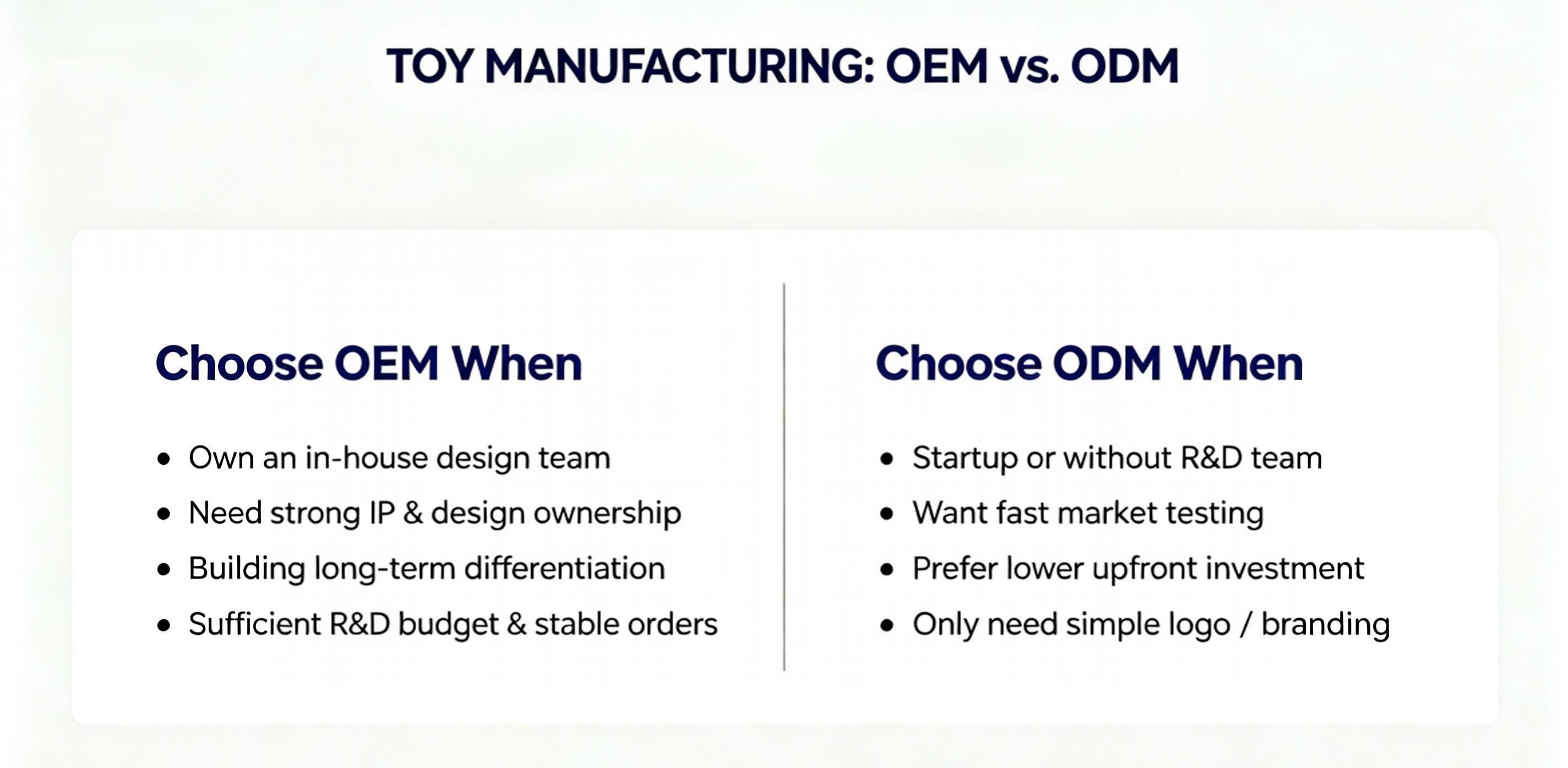
Choose Toy OEM When:
Toy OEM may be more suitable if:
-
You have an established product development team.
-
You have core technology or unique toy designs that need strong intellectual property protection.
-
You want to develop differentiated toy products.
-
Building long-term product and brand differentiation is important to your business.
-
You have sufficient budget for product development and tooling.
-
You expect stable order quantities.
For established brands with their own designs, technology, or product concepts, toy OEM can provide greater control over product development and help create more differentiated products.
Choose Toy ODM When:
Toy ODM may be more suitable if:
-
You are a startup brand or small to medium-sized seller.
-
You do not have your own product development capabilities.
-
You want to test the market quickly.
-
You prefer to start with lower upfront development investment.
-
Your toy requirements are relatively standardized.
-
You only need simple branding or limited product modifications.
-
Product uniqueness is not your primary concern.
For new brands and smaller sellers, toy ODM can be a practical way to start with an existing toy design, make the required modifications, and test the market without developing a completely new product from scratch.
Potential Risks When Ordering OEM or ODM Toys
Before starting an OEM or ODM toy project, buyers should clearly define important terms with the supplier in writing to reduce potential disputes during or after production.
OEM: Protect Your Mold and Design Ownership
For OEM projects, the contract should clearly state that the mold and product design belong to the brand. Buyers should also sign an NNN agreement to protect their product designs and confidential information.
These agreements can help prevent the factory from keeping samples or using the buyer's design for unauthorized production.
ODM: Define Exclusive Sales Rights
For ODM projects, buyers who want to avoid direct competition should discuss regional exclusive sales rights with the supplier before signing the agreement.
The agreement should clearly define the applicable territory and whether the supplier can provide the same design to competing brands. Buyers should also clarify terms related to future price increases and changing suppliers before starting a long-term cooperation.
Clear written agreements can help both sides understand their rights and responsibilities before production begins.
FAQ About Toy OEM and ODM
Is OEM or ODM better for a Small-Quantity Custom Toy Project?
If your order quantity is small and you do not have your own toy design, ODM is usually a better choice. You can start with an existing design, avoid new mold development, and may have a more flexible MOQ.
If you already have an exclusive design and sufficient order volume, OEM may be worth considering.
How can I protect my toy design from being copied?
If you have your own toy design, take steps to protect it before production starts. You can sign a confidentiality agreement with the factory, use staged payments for the project, and choose a reputable factory with a good track record. If the design is exclusive, arrange appropriate intellectual property protection in advance.
Can I customize an existing toy instead of developing a new one?
Yes. This is one of the main advantages of an ODM approach.
Depending on the product, you may be able to customize colors, logos, packaging, accessories, selected functions, or other product details without developing an entirely new toy.
How much does toy OEM cost?
There is no standard price for toy OEM.
The total cost can depend on product complexity, materials, tooling requirements, number of molds, electronic components, customization level, order quantity, packaging, testing, and other project requirements.
The best approach is to provide your product requirements and request a formal quotation from the supplier.
Why Work With Zhorya for Toy OEM/ODM?
Choosing between OEM and ODM is only the first step. The next step is finding a supplier that can match your product requirements, order quantity, customization needs, and target market.
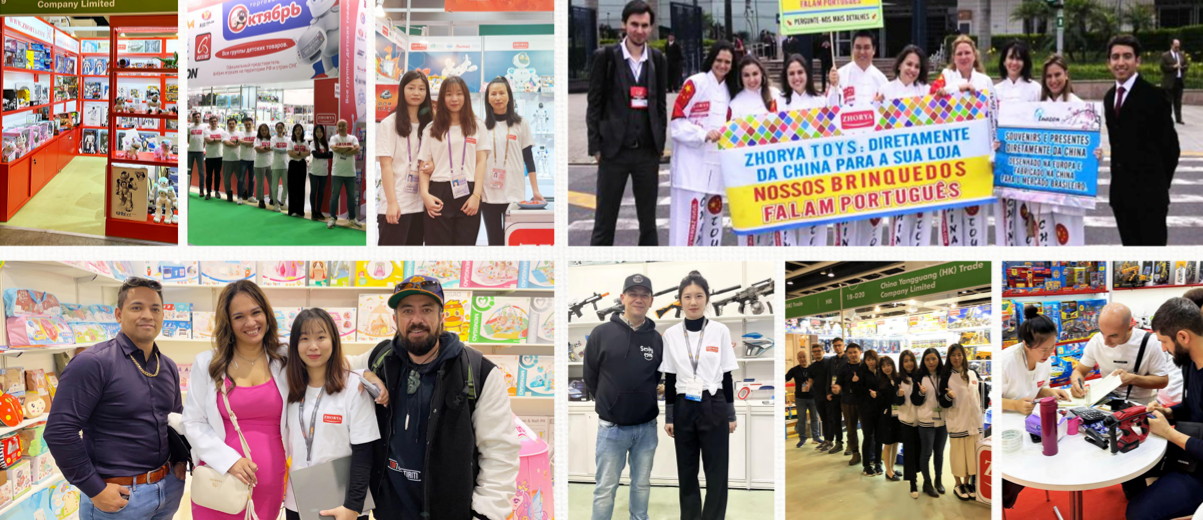
Zhorya is a China-based toy supplier serving international B2B buyers. With access to 2 million+ toy and related product SKUs across multiple categories, we help buyers explore suitable products for ODM customization or discuss requirements for tailored OEM projects.
Our End-to-End Services Include:
-
Product Selection & Customization: Match your specific target market and quality needs.
-
Sampling & Testing: Ensure design and safety standards are fully met.
-
Production & Quality Inspection: Rigorous QA control during manufacturing.
-
Logistics & Shipment: Smooth delivery right to your destination.
Whether you already have a product design or are still looking for a suitable toy to customize, share your requirements with us to take the next step.
Have a specific OEM or ODM toy project in mind? 👉 Contact Zhorya to discuss your requirements.
Still exploring products and suppliers? 👉 Create a free Zhorya account to explore our product range and find potential products for your business.
Get Your Free Quote
We will reply within 24 hours.