Login
Join Free
Categories
My Orders
Wish
Cart
0m³/0m³

English
English
 Русский язык
 中文
Toy-Grade vs Hobby-Grade RC Cars: What's the Difference?
2026-11-09 09:07:52
Not all remote control cars are designed for the same users. Some focus on simple operation and everyday entertainment, while others offer more precise controls, replaceable components, and opportunities for customization. Between these two ends, there are also RC cars that combine accessible operation with more advanced features.
For toy importers, wholesalers, and retailers, understanding the difference between toy-grade and hobby-grade RC cars is important when selecting products for different customer groups. However, product grade is not determined by speed, appearance, or a single specification. Control systems, electronic components, repairability, and the overall product design all play a role.
This guide explains the key differences, explores the middle ground between the two categories, and outlines what retailers should consider when building an RC car assortment.
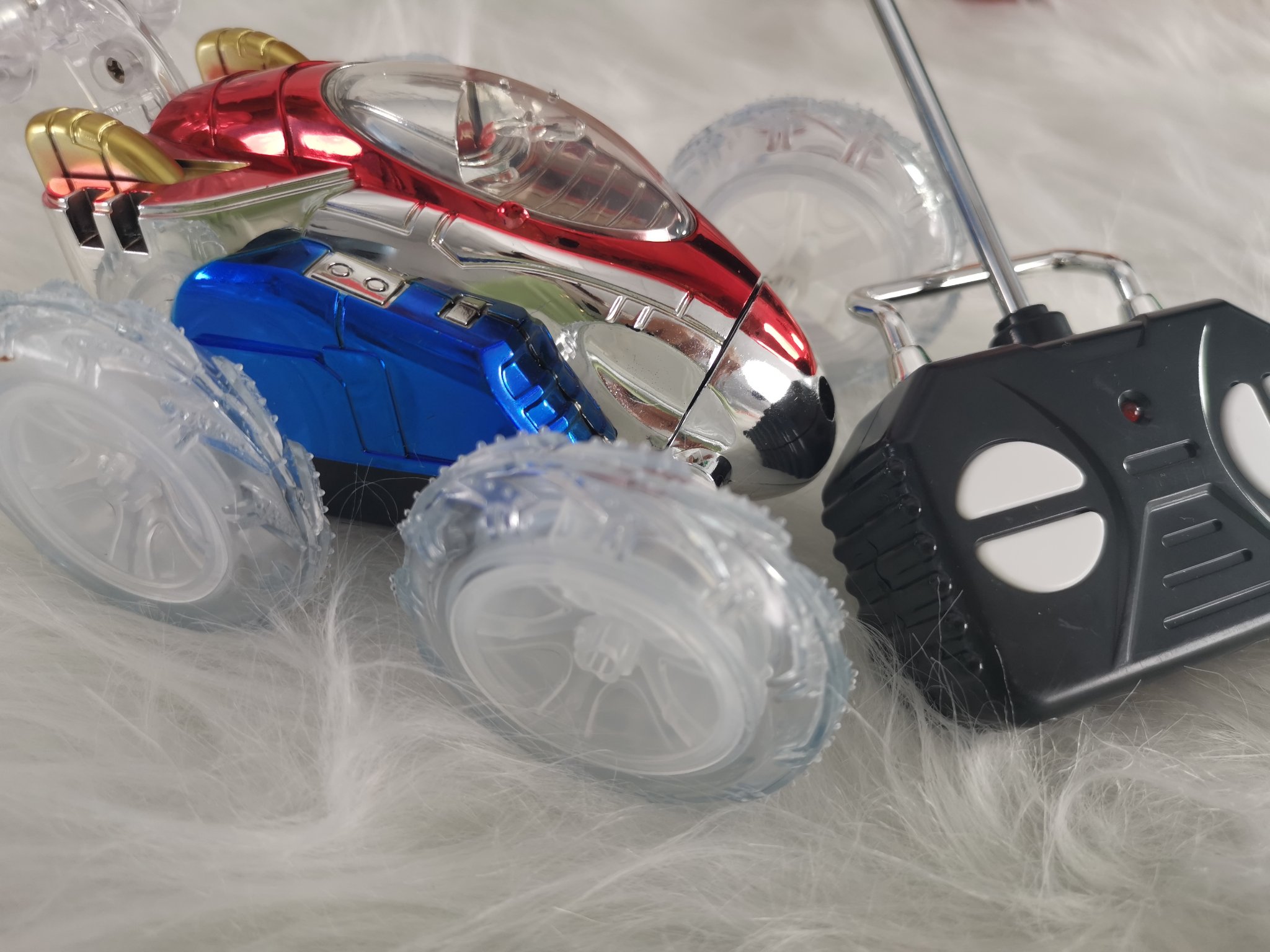
What Are Toy-Grade RC Cars?
Toy-grade RC cars are designed primarily for recreational use. They prioritize accessible operation, convenient setup, and entertaining features rather than extensive customization or technical performance.
Most models are ready to use with relatively straightforward controls. Depending on the design, they may offer forward and backward movement, steering, LED lights, sound effects, drifting, or stunt functions.
Common characteristics include:
-
Easy operation: Controls are generally designed for beginners and casual users.
-
Integrated electronics: Motors, receivers, and other electronic components are often combined into compact assemblies.
-
Convenient power options: Models may use built-in rechargeable batteries, removable battery packs, or standard replaceable batteries.
-
Play-oriented functions: Lights, music, spinning, flipping, and other interactive features add entertainment value.
-
Limited customization: Individual components may not be designed for independent replacement or performance upgrades.
Toy-grade does not mean poor quality. These products are developed for a different purpose: providing an enjoyable driving experience without requiring users to understand vehicle mechanics or perform regular maintenance.
They are commonly found in general toy stores, gift shops, department stores, and other retail channels serving children and casual users.
What Are Hobby-Grade RC Cars?
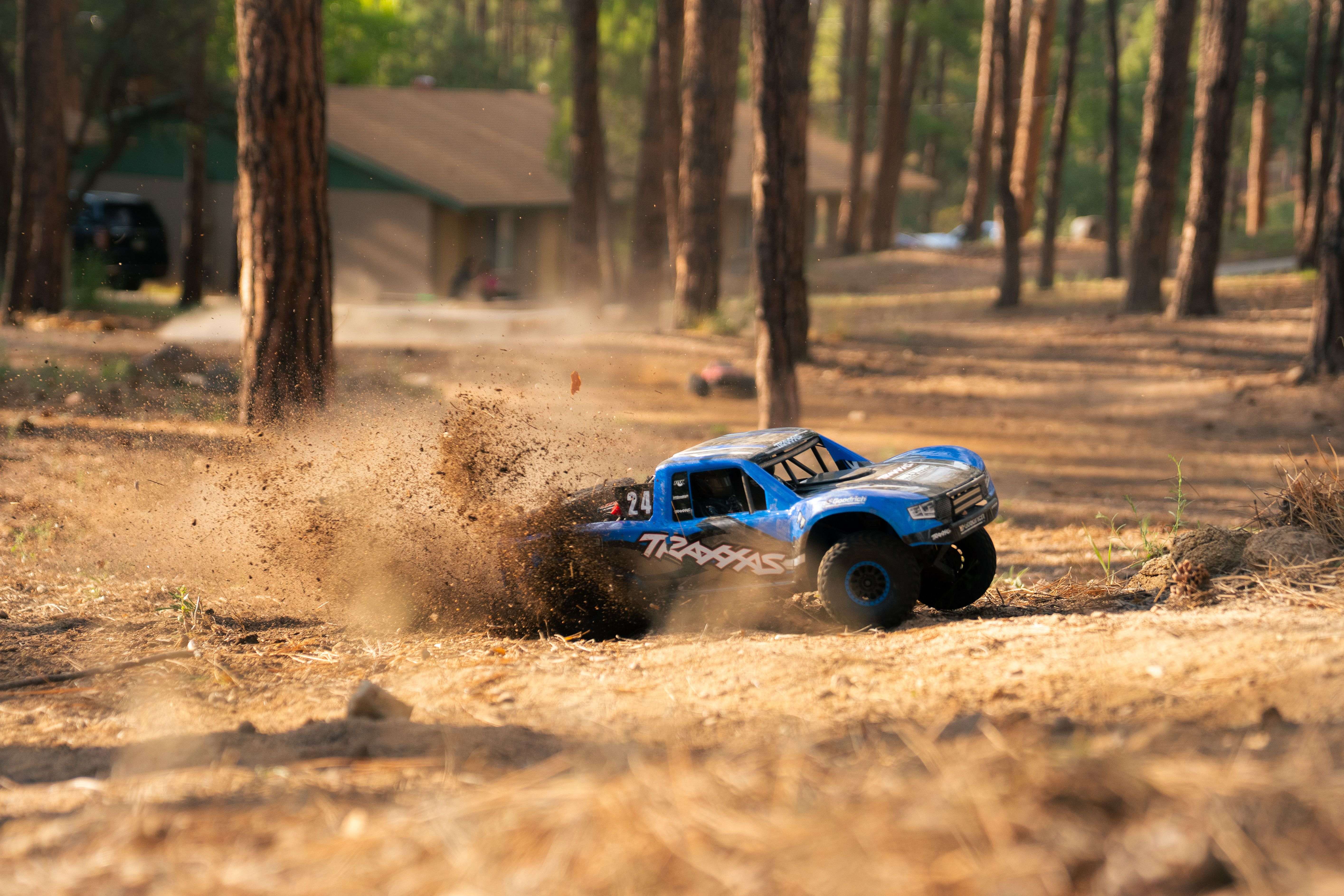
Hobby-grade RC cars are designed for users who want greater control over vehicle performance and more flexibility in maintenance and customization.
Their construction is generally more modular, allowing individual components to be accessed, replaced, or upgraded. Depending on the model, these may include motors, electronic speed controllers (ESCs), steering servos, receivers, suspension components, and drivetrain parts.
Typical characteristics include:
-
Proportional control: Steering and throttle respond to the amount of input applied, providing more precise driving.
-
Replaceable components: Individual parts can often be repaired or replaced without replacing the entire vehicle.
-
Customization options: Users may be able to modify motors, tires, suspension systems, batteries, and other components.
-
Specialized power systems: Rechargeable NiMH or LiPo battery packs are common, depending on the vehicle.
-
Performance-oriented construction: Some models feature advanced suspension, four-wheel drive, and more powerful motor systems.
Hobby-grade RC cars appeal to enthusiasts, experienced drivers, and users who enjoy racing, technical adjustments, and vehicle maintenance.
However, they may also require additional equipment, technical knowledge, and ongoing maintenance. Higher performance does not automatically make a vehicle suitable for every customer.
Toy-Grade vs Hobby-Grade RC Cars: 5 Key Differences
Although both categories use remote control technology, their differences extend beyond price and speed. The following comparison highlights the main factors that distinguish their design and intended use.
| Feature | Toy-Grade RC Cars | Hobby-Grade RC Cars |
|---|---|---|
| Main purpose | Recreational play | Performance and hobby use |
| Target users | Children, beginners, casual users | Enthusiasts and experienced drivers |
| Control system | Often simple; some offer proportional control | Generally proportional |
| Electronics | Often integrated | Generally modular |
| Motor systems | Usually basic integrated systems | Replaceable brushed or brushless systems are common |
| Battery options | Built-in, standard or rechargeable packs | Usually removable rechargeable packs |
| Maintenance | Generally limited | Designed for ongoing maintenance |
| Replacement parts | May be limited | Usually available for supported models |
| Customization | Limited | More extensive |
These are general characteristics rather than strict technical definitions. Some toy-grade models offer advanced control features, while certain entry-level hobby vehicles have relatively simple configurations. The actual specifications and component support are more reliable indicators than the product label alone.
1. Control Systems: Simple Operation vs Proportional Control
One of the most noticeable differences is how the vehicle responds to the remote controller.
Many toy-grade RC cars use straightforward directional controls. Users can move the vehicle forward, backward, left, or right without needing to adjust their input precisely.
Hobby-grade models commonly feature proportional steering and throttle. Instead of simply switching between preset movements, the vehicle responds according to how much input the driver applies.
For example, applying half throttle produces a different response from applying full throttle. Smaller steering inputs can also allow more controlled turning.
This distinction matters when selecting products for different users. Simple controls are convenient for younger beginners, while proportional systems can offer a more engaging experience for users who want greater driving precision.
2. Motors and Electronics: Integrated Systems vs Replaceable Components
Toy-grade RC cars typically use compact motor and electronic systems designed around the vehicle's intended functions and cost positioning.
Hobby-grade models may use brushed or brushless motors paired with electronic speed controllers. These components can often be replaced or upgraded individually.
Brushed motors are common in entry-level hobby vehicles, while brushless systems can offer higher efficiency and performance when correctly matched with compatible electronics and batteries.
For retailers, the important consideration is not simply whether a vehicle uses a brushless motor. It is whether the motor system, available components, and overall performance match the expectations of the intended customers.
A basic motor system can be entirely suitable for recreational driving, while advanced motor configurations are more relevant to users interested in speed and customization.
3. Batteries and Charging: Convenience vs System Compatibility
Battery configuration affects operating convenience, charging requirements, and the purchasing experience.
Toy-grade RC cars may use built-in rechargeable batteries, USB charging, removable rechargeable packs, or replaceable AA/AAA batteries.
Hobby-grade vehicles generally use removable rechargeable battery packs, including NiMH and LiPo batteries. Compatibility becomes more important because voltage, connectors, battery dimensions, and charging equipment must match the vehicle.
LiPo batteries also require compatible chargers and appropriate handling procedures.
When comparing RC cars for wholesale purchasing, check:
-
Whether the battery is included.
-
Whether the battery is built-in or removable.
-
Battery capacity and charging time.
-
Whether a charging cable or charger is provided.
-
Whether compatible replacement batteries are available.
A product with an attractive specification can still create problems for retailers if essential accessories are not included or replacement batteries are difficult to obtain.
4. Repairability and Spare Parts: Whole-Unit Replacement vs Component Maintenance
Repairability is one of the clearest practical differences between many toy-grade and hobby-grade RC cars.
With conventional toy-grade models, electronic components may be integrated into a single assembly. If an important component fails, replacing the entire vehicle may be more practical than repairing it.
Hobby-grade models are generally designed to support component-level maintenance. Users can often replace damaged tires, suspension parts, motors, steering servos, or other individual components.
This creates different after-sales expectations.
For general toy retailers, straightforward operation and product reliability may be more important than extensive spare-part availability.
For specialist RC shops, replacement components and technical support can be essential purchasing considerations.
Retailers should therefore evaluate spare-part availability according to the product's intended market rather than assuming every RC car requires the same level of after-sales support.
5. Customization and Maintenance: Ready-to-Use vs Ongoing Development
Toy-grade RC cars are generally designed to provide an enjoyable experience straight out of the box. Their features and configurations are usually determined by the manufacturer.
Hobby-grade models give users more opportunities to adjust performance, replace components, and experiment with different configurations.
This difference also affects the ownership experience. A beginner may prefer a vehicle that requires little setup, while an enthusiast may enjoy spending time adjusting suspension, changing tires, or upgrading the motor.
Neither approach is inherently better. The right choice depends on how much involvement the customer wants beyond simply driving the vehicle.
Is There a Middle Ground Between Toy-Grade and Hobby-Grade RC Cars?
Yes. The RC car market is not divided into two completely separate groups.
Many products sit somewhere between basic toy-grade models and fully customizable hobby-grade vehicles. They offer additional features and more responsive controls without requiring the same level of technical knowledge or maintenance as specialist RC models.
For example, an RC car may offer:
-
2.4GHz remote control.
-
Proportional steering.
-
Four-wheel drive.
-
Rechargeable battery systems.
-
Drift or stunt functions.
-
Improved suspension and handling.
However, having these features does not automatically make a vehicle hobby-grade.
A model may offer proportional control but still use integrated electronics with limited replacement-part support. Another may feature four-wheel drive and a rechargeable battery but remain primarily designed for recreational play.
This is why retailers should look at the complete product configuration rather than assigning a grade based on one specification.
For businesses serving customers who want more than a basic remote-control toy but are not necessarily looking for a specialist hobby vehicle, these feature-rich models can provide another product option.
Does the Type of RC Car Determine Its Grade?
No. Vehicle type and product grade describe two different things.
Vehicle type refers to the car's design, appearance, and intended driving style. Product grade relates more closely to its construction, control system, component support, and customization potential.
For example, drift cars, stunt cars, and off-road trucks can all exist in different product configurations.
RC Drift Cars
Drift RC cars are designed to slide through corners and perform controlled drifting movements.
Toy-oriented models may feature simple drift functions and easy-to-use controls. More advanced versions can offer proportional steering, adjustable configurations, and replaceable components.
<Example: RC Drift Cars can serve both casual play and more specialized driving interests.>
RC Stunt Cars
Stunt cars focus on interactive movements such as spinning, flipping, rotating, and driving on different sides.
Many are designed for recreational play, with functions that make them visually engaging and easy to demonstrate in retail environments.
Their grade should be assessed by their actual electronics and construction, not by the number of stunt functions advertised.
RC Off-Road Cars and Trucks
Off-road RC vehicles are designed to handle surfaces such as dirt, grass, and uneven terrain, depending on their construction.
Basic models may focus on accessible outdoor play, while advanced hobby vehicles may include more sophisticated suspension systems, drivetrain configurations, and replaceable components.
The same vehicle category can therefore appeal to very different customer groups.
For retailers, this distinction is useful when organizing an assortment. Drift, stunt, and off-road describe different driving experiences, while toy-grade and hobby-grade help indicate the product's technical positioning.
Which RC Cars Should Toy Retailers Stock?
The right product selection depends on the customers a business serves, its retail positioning, and the purchasing expectations of its market.
Instead of focusing exclusively on toy-grade or hobby-grade models, retailers can consider several customer segments.
1. General Toy Stores and Gift Shops
Product focus: Accessible toy-grade RC cars
Customers in these channels often look for entertaining products that are easy to understand and convenient to use.
Suitable features may include:
-
Simple remote controls.
-
Convenient rechargeable batteries.
-
Attractive vehicle designs.
-
LED lights and sound effects.
-
Stunt and interactive functions.
Mini RC cars, stunt cars, and basic racing models can all be considered.
For this segment, convenient operation and clear product presentation are generally more relevant than extensive customization options.
2. Retailers Targeting Older Children and Teenagers
Product focus: Feature-rich and entry-level advanced RC cars
Older children and teenagers may look for more challenging driving experiences.
Products featuring proportional controls, drifting, four-wheel drive, off-road designs, and improved handling can provide more variety.
Offering different functional configurations allows retailers to address different preferences without relying on age alone to determine product suitability.
3. Specialist RC and Hobby Shops
Product focus: Hobby-grade RC cars
Specialist retailers serve customers who may have specific requirements for performance, repairability, and customization.
Their purchasing considerations often include:
-
Motor and ESC compatibility.
-
Battery specifications.
-
Replacement-part availability.
-
Upgrade options.
-
Suspension and drivetrain configurations.
-
Technical documentation and after-sales support.
For these businesses, the long-term availability of components can be just as important as the initial product performance.
4. Building a Balanced RC Car Assortment
For wholesalers and importers supplying multiple retail channels, offering different product levels can help build a more flexible product range.
A practical assortment may include:
| Product Positioning | Main Product Characteristics | Retail Role |
|---|---|---|
| Entry-level | Simple controls, basic functions | Accessible everyday toy options |
| Feature-rich | Drift, stunt, lights, 4WD, or other interactive functions | More varied play experiences |
| Advanced | Proportional controls, modular components, upgrade options | Customers seeking greater control and performance |
There is no universal inventory ratio for these groups. The appropriate mix depends on local demand, target customers, retail pricing, and the level of product support available.
The objective is to avoid relying on a single type of RC car when the business serves customers with different expectations.
How to Evaluate RC Cars Before Placing a Wholesale Order
Understanding product grades is useful, but wholesale buyers also need to verify the actual configuration of each model.
Two RC cars may look similar in photographs while having different controls, batteries, accessories, and component support.
Before placing an order, consider the following checklist.
1. Verify the Control System
Do not assume that every 2.4GHz model has proportional steering or throttle.
Confirm the actual control functions, operating range, and whether multiple vehicles can operate together under the manufacturer's specified conditions.
2. Check the Complete Battery Configuration
Confirm the battery type, voltage, capacity, charging method, and whether the battery and charger are included.
Also check whether the remote controller requires separate batteries. These details affect the complete product configuration and should be clear before ordering.
3. Confirm Component and Spare-Part Availability
For advanced models, ask whether motors, ESCs, steering servos, tires, and other key components can be purchased separately.
For simpler toy-grade products, clarify the available warranty and defect-handling arrangements.
4. Review Packaging and Carton Specifications
Check the packaging dimensions, quantity per carton, gross weight, and whether the product is supplied with all advertised accessories.
Battery-related shipping requirements should also be confirmed, particularly for rechargeable lithium battery models.
5. Check Documentation and Market Requirements
Verify the recommended age, warning labels, user instructions, and applicable safety documentation for the destination market.
Requirements may vary depending on the destination country and the product's intended age group.
These checks provide a more reliable basis for comparing wholesale RC cars than relying on product titles, advertised speeds, or promotional descriptions alone.
Explore Wholesale RC Cars for Different Markets
Toy-grade and hobby-grade RC cars serve different purposes, and neither is automatically the better choice for every customer.
For toy importers, wholesalers, and retailers, the key is to match vehicle functions, control complexity, and product positioning with the needs of their target market.
At ZHORYA, our wholesale RC cars collection includes different remote-control vehicle styles, from mini RC cars and drift cars to stunt cars and off-road models.
Explore the collection to compare available designs and functions for your product assortment. For wholesale enquiries, use the inquiry button below to send us your requirements.

Get Your Free Quote
We will reply within 24 hours.