Login
Join Free
Categories
My Orders
Wish
Cart
0m³/0m³

English
English
 Русский язык
 中文
中文
A Complete Guide to Mini Fans for Global Buyers
2026-05-05 09:12:11
Mini fans have become a stable and fast-moving category in seasonal consumer goods. For importers, distributors, supermarket chains, and promotional product suppliers, they are not simply “portable cooling devices” but a high-turnover product line driven by summer demand cycles, impulse buying behavior, and retail display efficiency.
However, successful sourcing of mini fans in bulk requires more than comparing unit prices. It involves understanding product segmentation, performance consistency, battery compliance, packaging adaptability, and target-market positioning.
Why Mini Fans Are a Strong Bulk Sourcing Category
From a wholesale perspective, mini fans belong to the “high-frequency seasonal turnover” category. Demand is concentrated but predictable, especially in:
- Retail summer promotions
- Convenience stores and supermarket chains
- Travel and tourism product bundles
- Event giveaways and branded merchandise
- School and campus supply programs
Unlike long-life electronics, mini fans follow a repeatable seasonal demand curve. This makes them suitable for bulk procurement with planned inventory cycles.
Key sourcing advantages:
- Low unit cost with high retail markup flexibility
- Lightweight shipping reduces logistics pressure
- Easy bundling with other summer items (water toys, beach goods)
- High impulse purchase conversion in retail environments
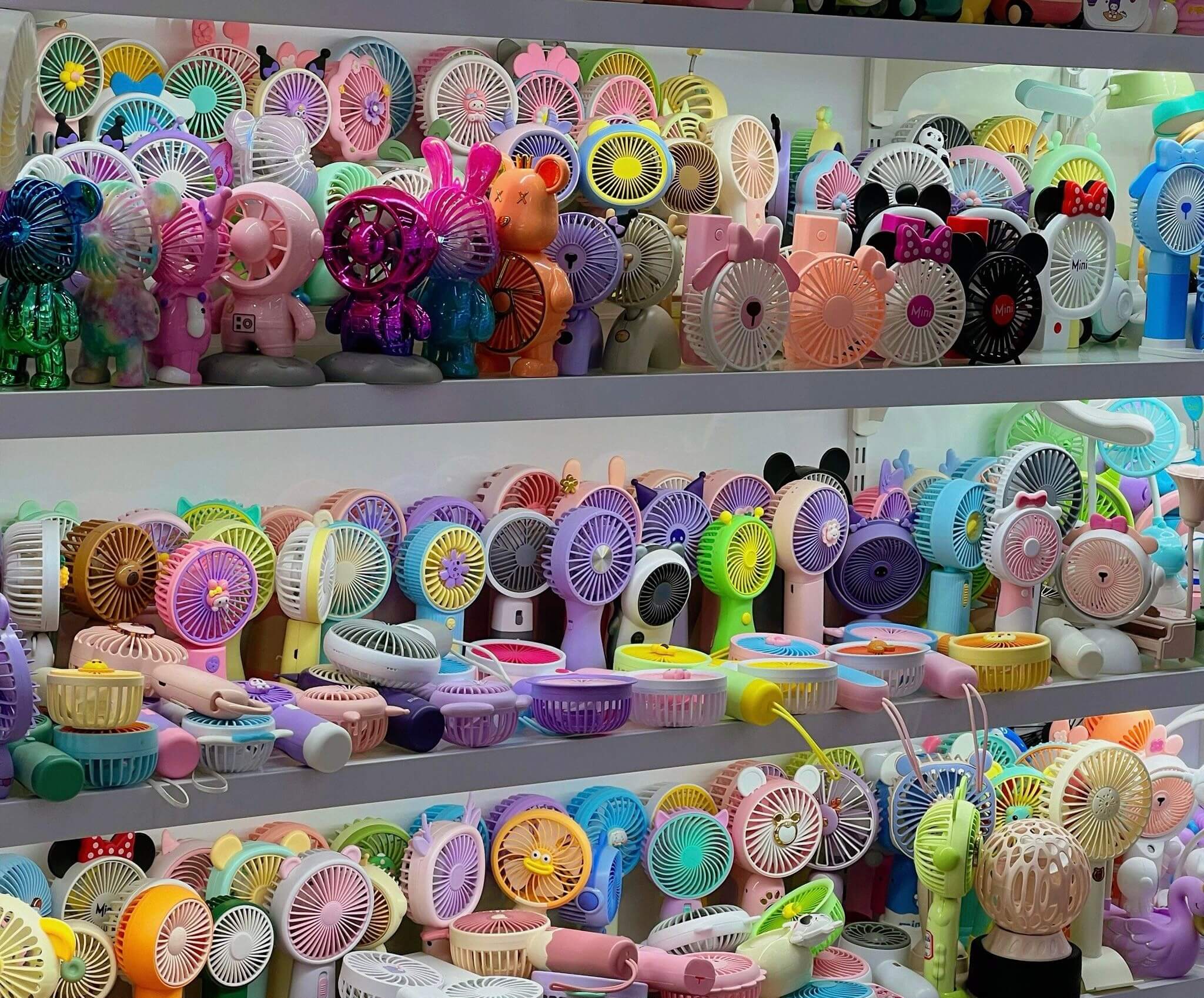
Mini Fans Classified by Usage Type
This is the most important classification for bulk purchasing decisions because it directly reflects end-user demand.
1. Handheld Mini Fans (High-Volume SKU)
Handheld fans are the most widely distributed model in global retail channels.
Characteristics:
- Lightweight handheld structure
- Simple motor system
- Single-user cooling design
Market positioning:
- Entry-level retail product
- High turnover seasonal item
- Strong impulse-buy behavior
Wholesale logic:
- Lowest unit cost
- High MOQ efficiency
- Fast inventory turnover
👉 This is typically the base SKU for most bulk mini fan orders.
2. Desktop Mini Fans (Stable Demand Category)
Desktop fans are designed for stationary environments.
Typical features:
- Adjustable angle support
- Stable base structure
- Continuous airflow performance
Main buyers:
- Office supply distributors
- Educational institutions
- Indoor retail chains
Wholesale insight:
This category generates stable repeat orders, rather than short seasonal spikes.
3. Neck Fans (Fast-Growing Trend Segment)
Neck fans represent one of the fastest-growing product segments in recent years.
Key characteristics:
- Wearable design (hands-free)
- Dual air outlet structure
- Rechargeable battery system
Market driver:
- Outdoor lifestyle trends
- Social media influence (TikTok-style viral products)
Wholesale value:
- Higher selling price than handheld units
- Strong differentiation in retail shelves
- Suitable for mid-to-high tier positioning
4. Clip-On Fans (Multi-Scenario Product Line)
Clip-on fans are designed for flexible installation.
Use environments:
- Baby strollers
- Gym equipment
- Office desks
- Travel bags
Wholesale advantage:
- Broad application scenarios
- Strong cross-category bundling potential
- Attractive for e-commerce listings
This category performs well in mother-baby and lifestyle retail channels.
5. Foldable / Pocket Fans (Promotional & Gift Segment)
Foldable fans focus on portability and compact storage.
Typical features:
- Collapsible structure
- Lightweight design
- Optional multi-function (e.g., power bank function)
Market use:
- Promotional campaigns
- Corporate gifts
- Travel kits
Wholesale positioning:
- Medium margin
- High customization potential
- Strong branding value

Mini Fans Classified by Functional Upgrade (Value Differentiation Layer)
This classification is critical for margin planning and product tier strategy.
1. Misting Fans (Cooling Enhancement Segment)
These models combine airflow with water mist.
Value proposition:
- Enhanced cooling effect
- Strong summer demand spike
- Visual “refreshing” perception
Wholesale insight:
Often used as seasonal bestseller products.
2. Cooling / Ice Chamber Fans (Premium Tier)
These fans include cooling plates or ice modules.
Market positioning:
- Higher perceived value
- Mid-to-premium retail pricing
- Strong product differentiation
Suitable for:
- Brand-focused distributors
- Premium gift channels
3. Bladeless Mini Fans (Design-Driven Segment)
Inspired by bladeless airflow systems.
Key features:
- Safety-focused design
- Modern appearance
- Low noise output
Wholesale positioning:
- Higher unit cost
- Strong branding potential
- Suitable for gift and premium retail markets
4. LED Creative Fans (Entertainment & Promotion Use)
These fans include LED lighting or visual effects.
Use cases:
- Night markets
- Events and festivals
- Promotional giveaways
Value:
- High visual impact
- Low functional expectation, high attraction rate
Mini Fans Classified by Power System (Supply Chain Impact Factor)
Power type directly affects logistics, compliance, and shipping cost.
1. USB Powered Fans
- Plug into power bank or laptop
- Stable production cost
- Widely compatible
👉 Most common for e-commerce channels.
2. Rechargeable Battery Fans
- Built-in lithium battery
- Higher portability
- Preferred for outdoor use
⚠ Requires:
- Battery certification (UN38.3 in many export markets)
- Proper shipping documentation
3. Dry Battery Fans
- Uses AA batteries
- Lower manufacturing complexity
- Limited performance
Market position:
- Low-cost promotional segment
- Declining but still used in specific retail channels
Key Procurement Factors for Bulk Buyers
When sourcing mini fans in bulk, price is only one layer of evaluation. Professional buyers typically assess:
1. Motor Stability & Air Output Consistency
Batch inconsistency is a common issue in low-cost supply chains. Airflow variation directly affects retail satisfaction and return rate.
2. Battery Certification & Safety Compliance
Export markets often require:
- UN38.3 certification
- Local battery safety standards
Ignoring compliance leads to customs delays and shipment rejection.
3. Material Durability
ABS plastic remains the standard due to:
- Lightweight structure
- Impact resistance
- Cost efficiency
However, reinforcement quality differs significantly across factories.
4. Packaging Adaptability
Retail-ready packaging is critical for:
- Shelf display efficiency
- Brand customization
- Seasonal promotion alignment
Market Timing Strategy for Mini Fans Bulk Orders
Mini fans are highly seasonal products. Procurement timing determines profitability.
Typical cycle:
- Q1: preparation and factory allocation
- Q2: early shipment and inventory build-up
- Q3: peak demand (highest sales volume)
- Q4: clearance and residual stock distribution
Late procurement often leads to higher freight cost and limited production capacity.
Why Zhorya for Mini Fans Bulk Sourcing
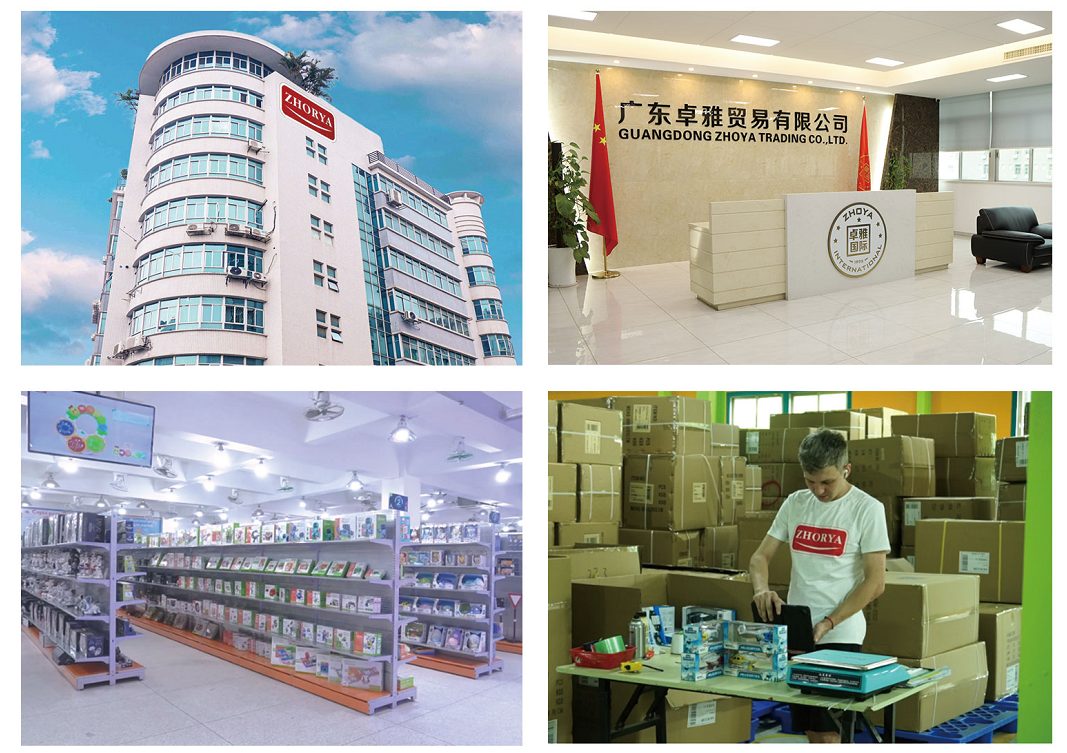
Zhorya, based in China, operates as a sourcing platform for seasonal toys and consumer products, including mini fan product lines designed for bulk distribution channels.
From a procurement standpoint, the key advantages include:
- Structured product range across handheld, clip-on, and neck fan categories
- Support for OEM customization (color, packaging, branding)
- Stable supply capacity for seasonal demand peaks
- Ability to align product specifications with different market segments
- Experience in managing bulk export documentation and shipping coordination
Unlike fragmented sourcing channels, centralized procurement helps reduce inconsistency in batch quality and improves supply chain predictability during peak seasons.
For importers, distributors, and retail buyers planning seasonal inventory, Zhorya provides a consolidated sourcing route for mini fans and related summer product categories.