Login
Join Free
Categories
My Orders
Wish
Cart
0m³/0m³

English
English
 Русский язык
 中文
中文
Fuse Beads Are Evolving into a Global DIY and Stress-Relief Trend
2026-02-07 08:55:10
For decades, fuse beads were positioned almost exclusively as children's educational toys. They were sold as simple craft kits designed to improve hand-eye coordination, color recognition, and patience. Today, that positioning is changing fast.
Fuse beads are quietly transforming into a cross-age DIY product with strong appeal to teenagers, young adults, and creative hobbyists worldwide. For buyers, distributors, and brands, this shift represents more than a trend—it signals a long-term category upgrade driven by lifestyle changes, emotional needs, and evolving consumer behavior.
The Global DIY Market Is Fueling Category Expansion
The rise of fuse beads is closely tied to the broader DIY market. According to Business Research Insights, the global DIY market reached approximately USD 850 billion in 2024 and is expected to grow at a 4.8% compound annual growth rate, reaching USD 1.3 trillion by 2033.
This growth is not only about tools or home renovation. A significant portion comes from creative, hobby-based DIY products that help consumers relax, personalize their environment, and step away from screens. Fuse beads fall squarely into this segment, offering low-cost materials with high creative output.
From a category development perspective, fuse beads offer long-term growth potential.
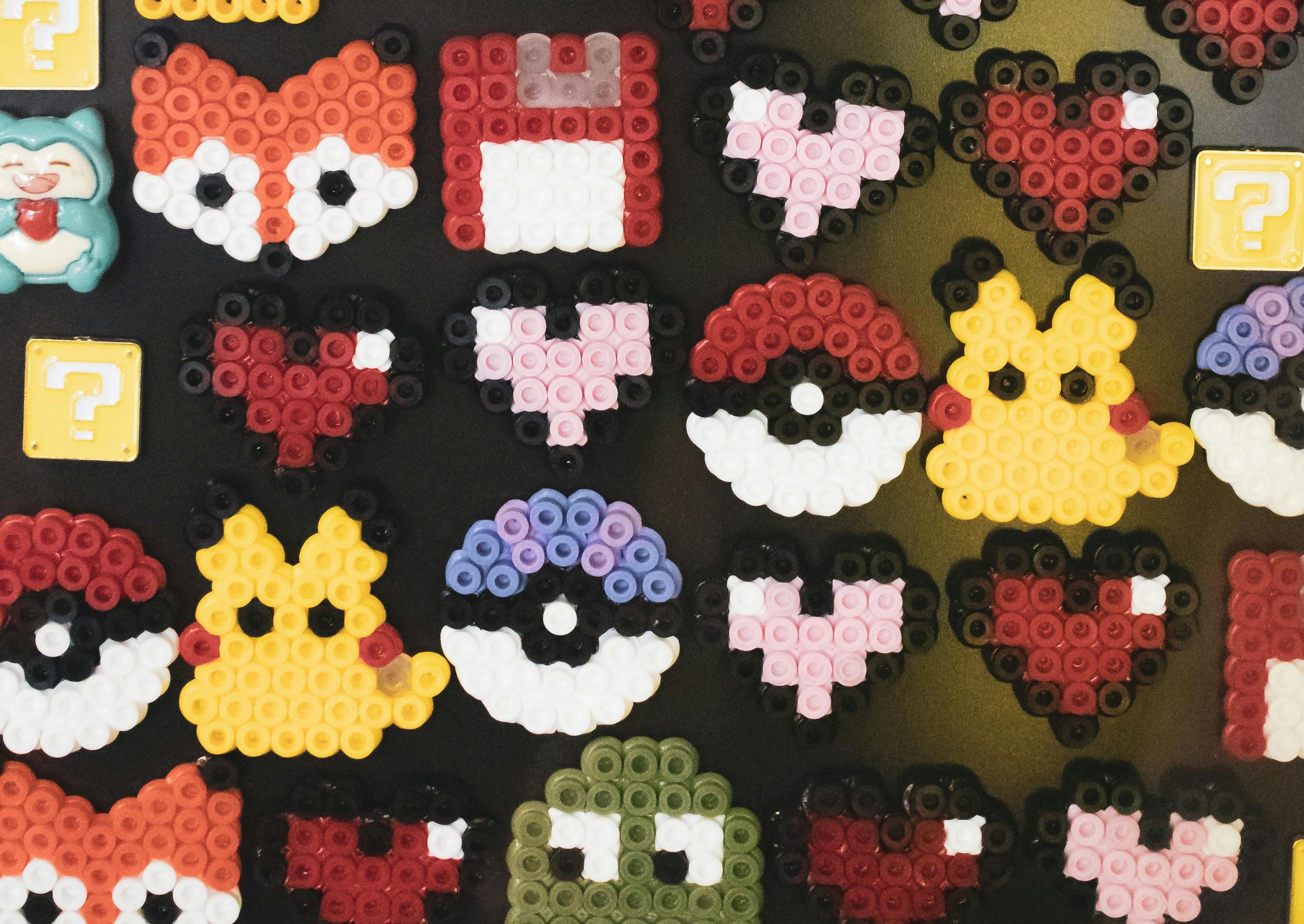
Why Fuse Beads Are Gaining Popularity Among Young Adults
One of the most important changes in recent years is the age expansion of fuse bead users. While children remain a core audience, young adults are increasingly adopting fuse beads for entirely different reasons.
The key drivers include:
-
Low barrier to entry: No professional skills or tools required
-
High creative freedom: Unlimited color and pattern combinations
-
Stress-relief value: Repetitive, focused actions help reduce anxiety
-
Offline engagement: A break from digital overload
Unlike many crafts that require training or expensive equipment, fuse beads allow users to start creating immediately. This balance between simplicity and creativity is exactly what modern consumers are looking for.
Stress Relief Is No Longer a Bonus—It's a Selling Point
Mental well-being has become a central factor in purchasing decisions. Products that help users relax, decompress, or slow down are increasingly valued, especially by students and working adults.
Fuse beads naturally support this demand. The act of placing beads one by one is calming and meditative. There is no time pressure, no competitive outcome, and no "correct" result. This makes fuse beads particularly attractive as a stress-relief DIY product, not just a toy.
For buyers and retailers, positioning fuse beads as a creative relaxation product rather than only a children's toy opens the door to new marketing angles and customer segments.
Visual Appeal and Social Sharing Drive Demand
Fuse beads perform exceptionally well on visual platforms. Their pixel-style appearance makes them ideal for short videos and image-based content. Time-lapse videos showing the creation process often generate strong engagement because they combine order, creativity, and transformation.
This organic social helps drive demand without heavy advertising. For brands and distributors, it means fuse beads benefit from user-generated content and community-driven promotion, increasing product visibility and longevity.
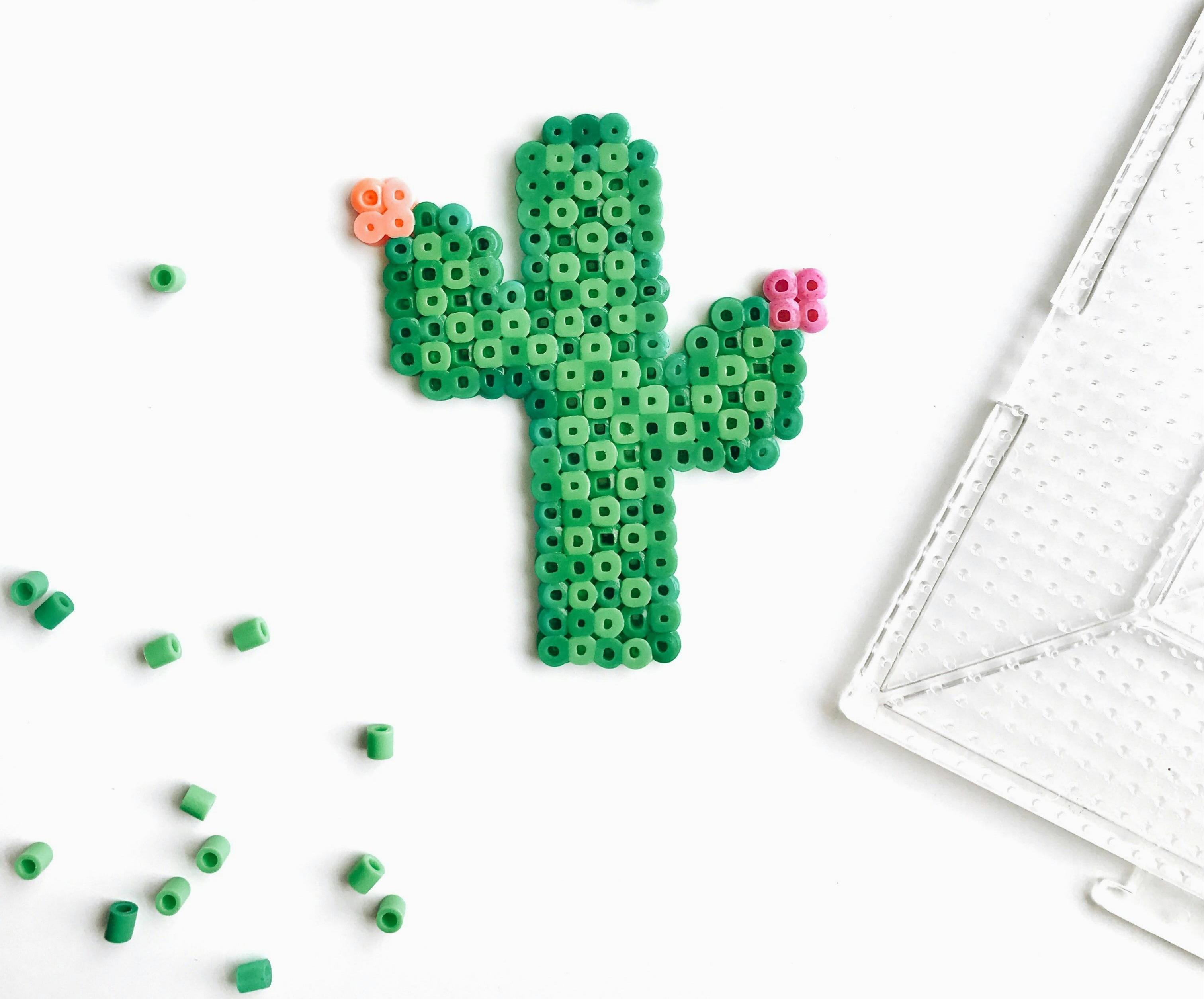
Portability Is Redefining What Consumers Want to Create
Another important shift is how consumers use finished fuse bead products. The market is moving away from items that are only meant to be displayed at home. Instead, consumers increasingly prefer creations that are portable, wearable, or attachable.
Small fuse bead creations are now commonly used as:
-
Bag charms
-
Keychains
-
Backpack accessories
-
Decorative hangers
These products align with the broader trend toward compact, mobile lifestyle items. Fuse bead charms are no longer limited to young children—they are used by teenagers and adults as personal accessories, souvenirs, or gifts.
From 2D Patterns to 3D Creations: A Clear Product Trend
Consumer preferences are also evolving in terms of product complexity. While traditional 2D fuse bead patterns remain popular, there is a growing demand for three-dimensional designs and kits.
Many adult hobbyists are specifically looking for:
-
3D animals and characters
-
Stand-up decorative models
-
Modular objects that can be assembled
-
Functional or semi-functional items
Three-dimensional fuse bead kits create a stronger sense of achievement and value. They require planning and spatial thinking, which appeals to experienced DIY users. This trend highlights the importance of offering layered product ranges, from beginner sets to advanced kits.
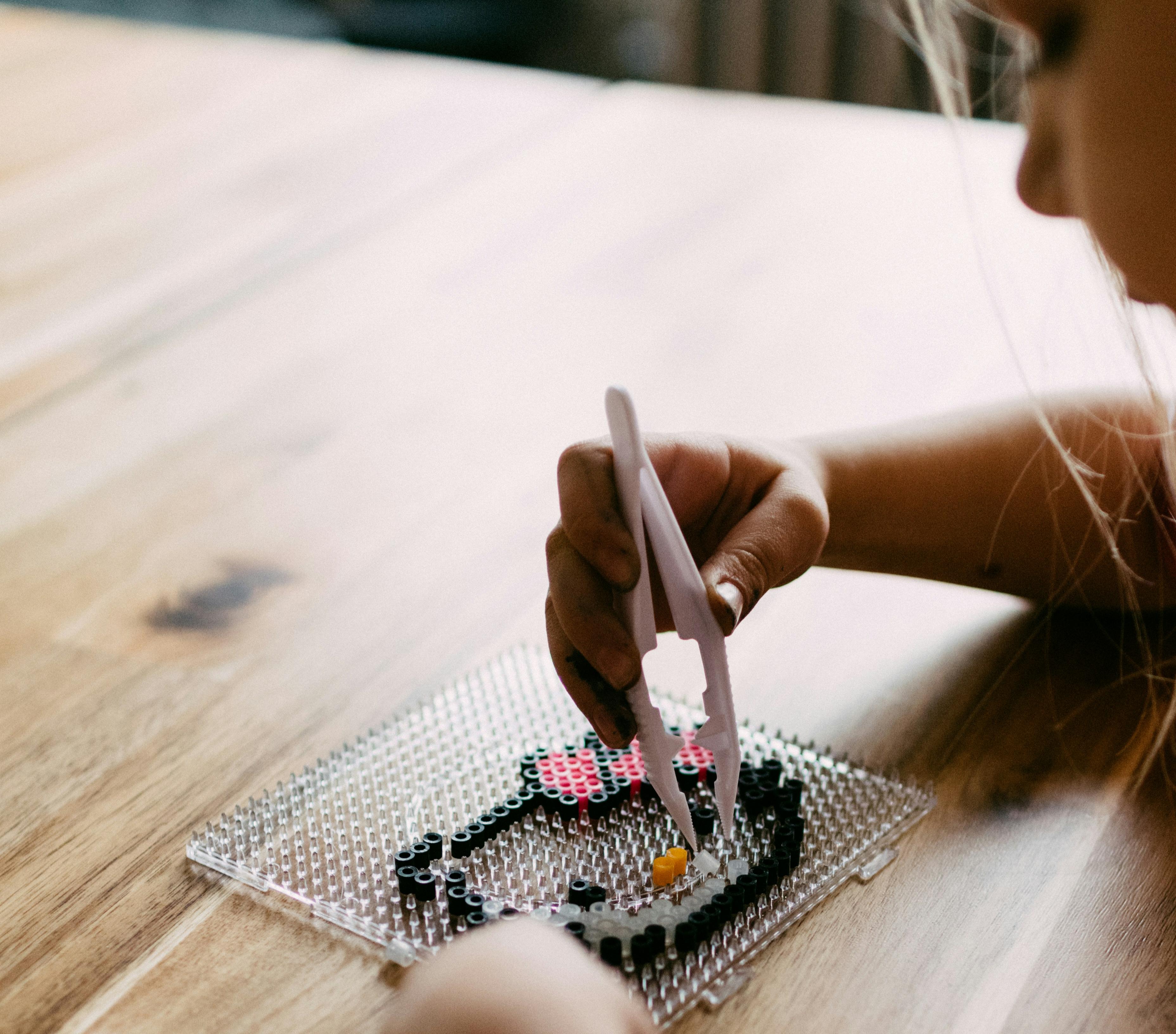
Product Variety as a Natural Outcome of Category Maturity
As fuse beads move beyond entry-level crafting, the category itself is becoming more layered. A single, standardized kit is no longer sufficient to support the different ways consumers engage with fuse bead creativity today.
Instead, the market is gradually organizing around usage depth and creative intent. Some users focus on precise color control and custom designs, while others prefer ready-to-use combinations or guided patterns. At the same time, more experienced creators are looking for projects that involve structure, assembly, and spatial thinking.
Within this context, variety is not an added feature—it is a natural response to how the category is being used. Different formats and configurations allow fuse beads to remain relevant across educational, hobby-based, and lifestyle-driven scenarios, without forcing the product into a single definition.
Zhorya's Fuse Bead Product Range and Market Advantages
As a supplier with extensive experience in toy and DIY categories, Zhorya provides a comprehensive fuse bead product lineup designed to meet diverse market needs.
The range includes:
-
Single-color fuse beads for professional or large-scale projects
-
Multi-color mixed sets suitable for beginners and mass-market buyers
-
Traditional 2D pattern kits for educational and entry-level use
-
Three-dimensional pattern sets that appeal strongly to adult hobbyists
This variety allows buyers to build differentiated product assortments while maintaining consistent quality standards. By covering both children's and adult-oriented fuse bead products, Zhorya supports clients who want to expand beyond traditional toy positioning and tap into the growing DIY and stress-relief market.
Conclusion
Fuse beads are no longer just children's toys—they have become a creative, stress-relief DIY product for all ages. With growing demand for both simple and 3D designs, their appeal spans education, hobbies, and lifestyle use. Suppliers like Zhorya, offering diverse, high-quality sets, enable buyers and distributors to meet these evolving consumer needs and tap into the expanding DIY market.
Get Your Free Quote
We will reply within 24 hours.