Login
Join Free
Categories
My Orders
Wish
Cart
0m³/0m³

English
English
 Русский язык
 中文
中文
Exploring the Benefits and Play Methods of Building Blocks
2024-07-31 16:41:20
Building blocks are timeless educational tools that play a crucial role in early childhood development. From enhancing cognitive skills like color and shape recognition to fostering creativity and hand-eye coordination, these toys offer a wealth of benefits for growing children. As kids interact with building blocks, they engage in activities that support their learning and development across multiple domains. This blog explores the diverse ways children can play with building blocks and highlights the numerous advantages these classic toys provide.
What are the Ways to Play with Building Blocks?
Stage of Recognizing Things
1. Recognize colors
2. Recognize shapes. Many building block boxes have hollow designs, which allow children to recognize various shapes by hand, and can also recognize size, thickness.
3. Image recognition, cats, dogs, etc., can be combined with real objects, which is more helpful for children's ability to recognize objects.
4. Number recognition
5. Recognize operation symbols
Graphic Combination
Graphic combination, two triangles can form a square, two semicircles can form a circle, etc.
Mathematical Operations
Simple mathematical operations can be performed
Classification of Graphics and Objects
Break up the building blocks and let the children classify them according to certain situations, such as animals, furniture, weather, etc., to train the children's ability to summarize and generalize.
Use Building Blocks to Create Various Shapes
1. At the beginning, you can guide the children to use various graphics to arrange the existing simple objects.
2. Let the children use their imagination and create freely.
2. What are the benefits of children playing with building blocks?
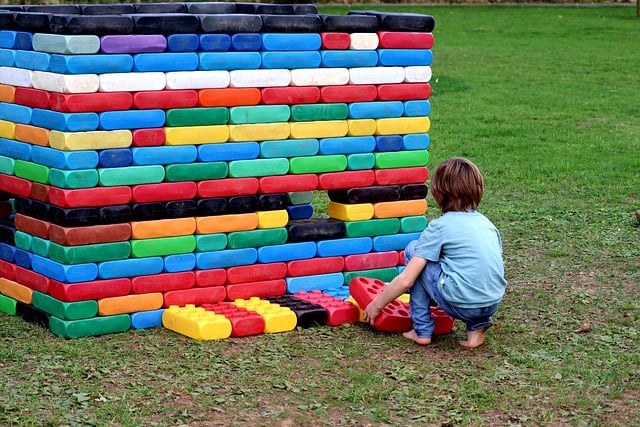
Develop the Right Brain and Give Full Play to Creativity
Children can use their imagination and creativity in the process of playing with building blocks, and then design and build according to their own ideas. This process is actually the development of the baby's right brain, because the right brain controls our human creative ability. Therefore, building blocks have the educational effect of developing the right brain.
Hand-eye coordination and comprehensive development
Playing with building blocks is a process of consistent action of heart, hand, brain, and eyes. Children are not playing aimlessly. They are designing in constant thinking and then completing the work with their hands. This process is the cultivation of children's hand-eye coordination ability.
It is also beneficial to language and social skills
When children build blocks together, they often need to communicate and coordinate their ideas. For example, expressing the idea of building blocks, wanting to exchange blocks with others, etc., all require language support. Therefore, playing with blocks is also a good opportunity to develop language and social skills.
It can cultivate the baby's ability to play actively
Building blocks are a classic toy that babies often play with, just like the staple food in meals. If the baby does not use his imagination and think about how to play, he will not be able to feel the fun. And those toys that make sounds, shine, or have a certain specific image mainly rely on the toys themselves to bring fun to the baby, that is, the baby's "snack". "Staples" are indispensable, so babies should play more "staple" toys from an early age.
Enhance the Relationship Btween Parents and Babies
It is difficult for babies under 3 years old to play with blocks by themselves, so it is best to play with blocks as a family game, and the whole family can play together, which can also deepen the parent-child relationship. Let the baby fully feel the love of his parents from an early age, and have many experiences of playing happily with his parents, and the baby will be more confident when he grows up.
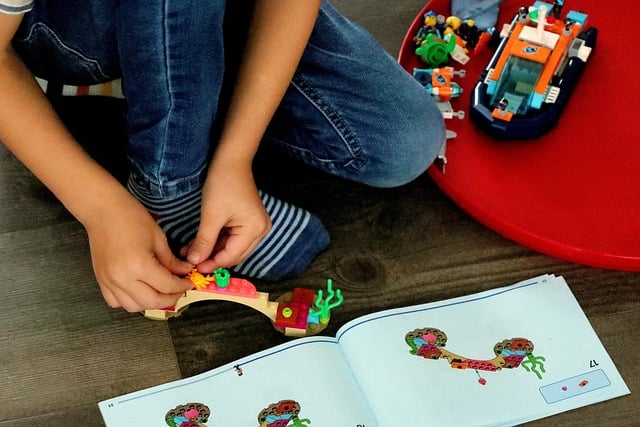
In addition, the benefits of babies playing with building blocks include:
1. Fully mobilize the baby's initiative and enthusiasm to participate in activities, so that the baby can truly become the theme of the activity, and can also stimulate the baby's creative desire and innovation ability.
2. Building blocks independently enables the baby to learn to reflect, which helps to improve the baby's learning ability.
3. Building blocks gives the baby a good space for self-development, so that the baby can learn to solve problems and overcome difficulties. The baby can integrate the usual knowledge and experience into the building block activities, and solve various problems through his own manipulation and thinking, which improves the baby's ability to overcome difficulties.
4. Building blocks provide opportunities for babies to learn to cooperate with others, negotiate with each other, learn from each other's strengths and weaknesses, and unite and love.
5. In the process of building blocks, the baby gains confidence and experiences the joy of success. The variability of building blocks is suitable for babies with various interests and hobbies. Children of any personality can play their own advantages in the process of building blocks. Introverted babies can cultivate their boldness and confidence.
6. It is conducive to the development of "interpersonal intelligence". Building blocks in kindergarten groups naturally promotes communication and cooperation, and improves cooperation, communication and coordination skills.
7. It is conducive to the development of "body-kinesthetic intelligence". Building blocks is a hands-on and brain-based activity that can effectively develop small muscles, improve fine motor skills, and make children dexterous.
How to Induce Children to Play with Building Blocks
1. Demonstrate to Children to Play with Building Blocks
First, show the child how to build 3-4 blocks, let him imitate it, praise him for each block he adds, and slowly increase the child's curiosity and interest.
Build an easy building block for the child
First use a large building block as the base, and then use smaller building blocks or magnetic building blocks in turn to ensure that he is easy to succeed, so that the child will not feel frustrated when playing, which helps to arouse the child's interest.
2. Find Ways to Make Your Child Interested in Building Blocks
If your child is not interested, you can build 2-3 blocks first and only let him build the last block. If necessary, hold his wrist and let him build. After building, praise him immediately and let him push it down as encouragement.
3. Teach Your Child to Play with Building Blocks
You can teach him hand-to-hand first, and then switch to language. After learning to build 3-4 blocks, in order to consolidate the results and maintain interest, you can change the way to let the child continue to practice the ability to build high objects with hand-eye coordination. For example, replace the building blocks with chess pieces, bottle caps of small bottles, hardcover books, cans, etc., or teach him to build a small bridge or pyramid in the shape of a Chinese character (3 blocks on the bottom, 2 blocks in the middle, and 1 block on the top), or stick a star on the wall above the small table and play the game of "building ladders for the little monkey to pick stars" with him, etc.
How Old is the Baby Better to Play with Building Blocks
The development of each baby is different, you can adjust it according to your baby's situation. Generally, babies can play with building blocks when they can pick up things by themselves;
Generally, 10-month-old babies play with building blocks by throwing blocks or knocking two blocks together. For babies with good fine motor skills, they may stack two blocks together. However, parents do not need to rush, nor do they need to compare their children with other children. Each child develops in a different order.
Conclusion
Playing with building blocks provides children with invaluable opportunities for growth and development. These toys not only spark creativity and improve cognitive abilities but also support social skills and physical coordination. As children experiment with different building techniques and problem-solving strategies, they build confidence and learn to collaborate with others. Introducing building blocks at an appropriate age can set the stage for a lifetime of learning and exploration, making them an essential addition to any child’s playtime activities.
Discover a diverse selection of children's toys at www.zhorya.com, your reliable China toys supplier offering a wide range of options for your business.